Blog

  • Digital Marketing Jobs in 2026: Best Career Opportunities for Beginners

    Digital Marketing Jobs in 2026: Best Career Opportunities for Beginners

    Introduction

    The digital world is changing how businesses communicate with customers, promote products, and build their brands. Companies now use websites, search engines, social media, email campaigns, and online advertising to reach potential customers. This growing dependence on digital channels has created new career opportunities for students, graduates, freelancers, and job seekers.

    Digital Marketing Jobs are an attractive career option for beginners because they offer different specializations, including search engine optimization (SEO), content writing, social media marketing, email marketing, and performance advertising. You do not always need a technical degree to enter this field, but you do need practical skills, industry knowledge, and a willingness to learn.

    In 2026, artificial intelligence (AI), data analytics, and changing consumer behaviour are also influencing the way marketing teams work. Understanding these changes can help beginners prepare for Digital Marketing Jobs and choose a suitable career direction.

    Whether you are a student, a recent graduate, or someone planning a career change, this guide explains the best job opportunities, essential skills, salary expectations, common challenges, and practical steps to start your career.

    Young man exploring digital marketing jobs on a laptop in a modern workspace with career-related icons and a job search bar.


I prefer this response

    Why Are Digital Marketing Jobs in Demand in 2026?

    Businesses increasingly depend on online platforms to reach their audiences. Small businesses need visibility, established brands want to strengthen customer relationships, and online stores need effective strategies to attract buyers.

    This creates opportunities for professionals who can connect marketing activities with business goals. Digital Marketing Jobs can involve creativity, communication, research, technology, or data analysis.

    Several factors contribute to the growing importance of this field:

    • Online business growth: Companies need professionals who can promote their products and services online.
    • Social media marketing: Brands require engaging content and consistent audience communication.
    • Search engine optimization: Businesses want customers to discover their websites through relevant searches.
    • Online advertising: Companies need people who can manage advertising campaigns and measure results.
    • AI-assisted marketing: Teams are exploring AI for research, planning, content assistance, and reporting.
    • Performance measurement: Businesses want to understand website traffic, leads, conversions, and advertising costs.

    These trends create different opportunities, but demand does not guarantee employment. Candidates who combine knowledge with practical experience are better prepared to demonstrate their abilities when applying for Digital Marketing Jobs.

    7 Best Digital Marketing Jobs for Beginners

    Choosing the right role depends on your interests, current abilities, and long-term goals. Some positions require creative thinking, while others involve research, analytics, or campaign management.

    Here are seven career options worth exploring.

    1. SEO Executive

    An SEO executive helps websites improve their visibility in search engine results. The role involves understanding what people search for and improving website content, structure, and accessibility.

    SEO is an important part of online marketing because relevant organic traffic can help businesses connect with people who are already looking for information or solutions.

    Key responsibilities:

    • Conduct keyword research and understand search intent.
    • Optimize page titles, headings, meta descriptions, and content.
    • Identify basic technical SEO problems.
    • Improve internal linking and website structure.
    • Monitor organic traffic and search performance.
    • Support content optimization and ethical link-building activities.

    Skills to learn: Keyword research, on-page SEO, basic technical SEO, Google Search Console, WordPress, and SEO reporting.

    Beginners can practise by optimizing blog posts or building a small website. These projects provide examples of practical work that can support applications for SEO-related Digital Marketing Jobs.

    2. Social Media Marketing Executive

    Social media marketing executives help businesses build an online presence on platforms such as Instagram, Facebook, LinkedIn, and YouTube.

    The role involves more than publishing posts. Professionals plan content, communicate with audiences, review engagement, and identify ways to improve performance.

    Key responsibilities:

    • Prepare social media content calendars.
    • Create captions, graphics, and short-video ideas.
    • Schedule posts and maintain consistency.
    • Respond to comments and messages.
    • Monitor audience engagement.
    • Review results and improve future content.

    Skills to learn: Canva, copywriting, content planning, audience research, social media analytics, and basic video editing.

    If you enjoy creativity and communication, this role may suit you. Create sample campaigns for a fictional business and explain your content strategy. A well-organized portfolio can help you demonstrate your readiness for Digital Marketing Jobs without claiming experience you do not have.

    3. Content Writer

    Content writers create articles, blog posts, website pages, email copy, and other written material. Businesses use content to explain their products, answer customer questions, build trust, and support marketing campaigns.

    AI tools can help with brainstorming and outlines, but effective content still requires research, originality, accuracy, and human judgment.

    Key responsibilities:

    • Write blogs and website content.
    • Research topics and relevant keywords.
    • Organize information with clear headings.
    • Edit and proofread articles.
    • Understand search intent and basic SEO.
    • Verify facts and maintain content quality.

    Skills to learn: English writing, grammar, storytelling, research, WordPress, SEO fundamentals, and responsible AI-assisted editing.

    Content writing may be a useful starting point for people who enjoy explaining ideas. Publishing well-researched articles on a blog or professional platform can also strengthen your portfolio for Digital Marketing Jobs.

    4. Google Ads and Performance Marketing Executive

    Performance marketing focuses on measurable outcomes such as leads, sales, registrations, and conversions. Professionals plan paid campaigns and evaluate whether advertising budgets are producing useful results.

    Key responsibilities:

    • Plan campaigns around business objectives.
    • Research audiences and advertising keywords.
    • Create advertisements and choose targeting options.
    • Monitor budgets and campaign performance.
    • Track conversions and cost per result.
    • Test different advertisements and landing pages.

    Skills to learn: Google Ads fundamentals, campaign planning, conversion tracking, analytics, spreadsheets, and advertising policies.

    Beginners should practise campaign planning before managing real budgets. Advertising performance depends on targeting, competition, creative quality, landing pages, and other factors, so results cannot be guaranteed.

    This specialization may suit people who enjoy experimentation, data, and measurable business outcomes. It can lead to performance-focused Digital Marketing Jobs as experience develops.

    5. Email Marketing Executive

    Email marketing helps businesses communicate with existing and potential customers through relevant messages. It can support newsletters, product announcements, customer education, and repeat purchases.

    Key responsibilities:

    • Write subject lines and email copy.
    • Create newsletters and campaign sequences.
    • Organize audiences into relevant segments.
    • Monitor clicks and conversions.
    • Improve campaigns using performance data.
    • Follow consent, privacy, and unsubscribe requirements.

    Skills to learn: Copywriting, audience segmentation, email automation, campaign reporting, and customer journey planning.

    Email marketing may suit beginners who enjoy writing and organized communication. Understanding audience needs and measuring campaign performance can help candidates prepare for Digital Marketing Jobs in this specialization.

    6. Digital Marketing Analyst

    Digital marketing analysts study data to understand how websites and campaigns perform. Their findings help businesses identify opportunities and make informed decisions.

    Key responsibilities:

    • Monitor website traffic and user behaviour.
    • Review campaign performance.
    • Measure leads, conversions, and engagement.
    • Prepare reports and dashboards.
    • Identify trends and performance problems.
    • Communicate findings to marketing teams.

    Skills to learn: Google Analytics 4, spreadsheets, data visualization, conversion tracking, and analytical thinking.

    This career path may suit people who enjoy numbers, research, and problem-solving. Beginners should practise interpreting sample reports and explaining what the data suggests rather than simply presenting statistics.

    7. Digital Marketing Executive

    A digital marketing executive may work across SEO, social media, content marketing, email marketing, and online advertising.

    This role can provide broad experience and help beginners understand how different marketing channels work together.

    Typical responsibilities:

    • Support marketing campaigns.
    • Update website content.
    • Assist with social media planning.
    • Conduct keyword and competitor research.
    • Prepare performance reports.
    • Coordinate content and campaign activities.

    A generalist role can be a useful starting point for someone who has not yet selected a specialization. Over time, practical experience can help you identify which Digital Marketing Jobs best match your strengths.

    Essential Skills for Digital Marketing Jobs in 2026

    Employers generally need more than candidates who know the names of marketing tools. They want people who can apply their knowledge to real business situations.

    Focus on these essential skills:

    1. Search engine optimization: Learn keyword research, search intent, on-page optimization, internal linking, and basic technical SEO.

    2. Content creation: Practise writing blogs, website pages, captions, and email copy. Make your content clear, accurate, and useful.

    3. Social media management: Learn content planning, audience engagement, platform selection, and performance measurement.

    4. Data analytics: Understand traffic, click-through rates, conversion rates, and cost per lead. Learn how to interpret results.

    5. AI tools: Use AI for brainstorming, research assistance, and repetitive tasks, while checking accuracy and originality.

    6. Communication: Develop clear writing, teamwork, presentation, and client communication skills.

    7. Problem-solving: Learn to identify marketing problems and recommend improvements based on evidence.

    You do not need to master everything at once. Choose a primary skill, practise consistently, and expand your knowledge gradually. This approach can make your preparation for Digital Marketing Jobs more focused and manageable.

    Essential skills for digital marketing jobs, including SEO, content creation, social media management, data analytics, AI tools, communication, and problem-solving.

    Common Problems Beginners Face and Their Solutions

    Many beginners complete online courses but struggle to find their first opportunity. The following problems are common, and each has a practical solution.

    Problem 1: Lack of Practical Experience

    Employers may want examples of your work rather than only a list of completed courses.

    Solution: Create an SEO-optimized article, a social media content calendar, or a sample advertising campaign. Explain your objectives, process, and findings honestly.

    Problem 2: Learning Too Many Tools

    Trying to learn every platform at once can prevent you from developing strong fundamentals.

    Solution: Select one specialization first. For example, start with SEO and WordPress or social media marketing and Canva. Explore related tools after understanding the basics.

    Problem 3: No Professional Portfolio

    A resume alone may not show how well you can complete practical tasks.

    Solution: Prepare a portfolio containing:

    • Two or three original blog articles.
    • Sample social media designs.
    • A keyword research document.
    • A content calendar.
    • A sample analytics report.
    • Explanations of your strategy and findings.

    Label practice projects clearly instead of presenting them as paid client work. This makes your portfolio more credible when applying for Digital Marketing Jobs.

    Problem 4: Weak Resume and Interview Preparation

    Some applicants describe their skills too generally and struggle to explain what they have learned.

    Solution: Customize your resume for each relevant vacancy. Include your projects, tools, certifications, and portfolio links. Practise explaining the problem you addressed and what you learned.

    Problem 5: Unrealistic Salary Expectations

    Some beginners expect a high salary immediately after completing a course.

    Solution: Research current entry-level vacancies and compare their requirements with your abilities. Consider the responsibilities, learning opportunities, working conditions, and salary before accepting an offer.

    How to Get Digital Marketing Jobs in 2026: A Step-by-Step Roadmap

    A clear learning plan can make your preparation more effective.

    Step 1: Learn the Fundamentals

    Understand SEO, content marketing, social media marketing, email marketing, paid advertising, and analytics. Use reliable learning resources and practise what you learn.

    Step 2: Choose a Specialization

    Select a role that matches your interests.

    • Enjoy writing? Explore SEO or content marketing.
    • Like creativity? Consider social media marketing.
    • Enjoy numbers? Explore analytics or performance marketing.
    • Prefer variety? Start with a general digital marketing role.

    You can change your specialization as you gain experience.

    Step 3: Practise With Projects

    Create a blog, design a social media campaign, or develop a sample marketing plan for a fictional business.

    Document your goals, process, tools, and findings. Report measurable results only when you have actually measured them.

    Step 4: Learn Relevant Tools

    Depending on your chosen role, practise Google Search Console, Google Analytics 4, WordPress, Canva, Google Ads, and relevant AI applications.

    Understand how these tools support marketing decisions instead of simply listing them on your resume.

    Step 5: Build a Portfolio

    Organize your best work in a simple website, document, or portfolio page. For every project, explain the problem, your approach, the tools used, and the outcome.

    Step 6: Prepare Your Resume and LinkedIn Profile

    Keep your resume clear and relevant. Highlight your practical skills, education, projects, and certifications.

    Use LinkedIn to share useful insights, connect with professionals, and discover opportunities. Be honest about your experience.

    Step 7: Apply for Entry-Level Positions

    Search for SEO trainee, digital marketing intern, social media executive, content writer, and junior digital marketing executive positions.

    Check job portals, company career pages, and professional networks. Customize applications and prepare to discuss your projects during interviews.

    Step 8: Keep Improving

    Marketing platforms and customer behaviour continue to change. Review your work, learn from feedback, and update your skills.

    Following these steps can help you become better prepared to apply for suitable Digital Marketing Jobs rather than relying on certificates alone.
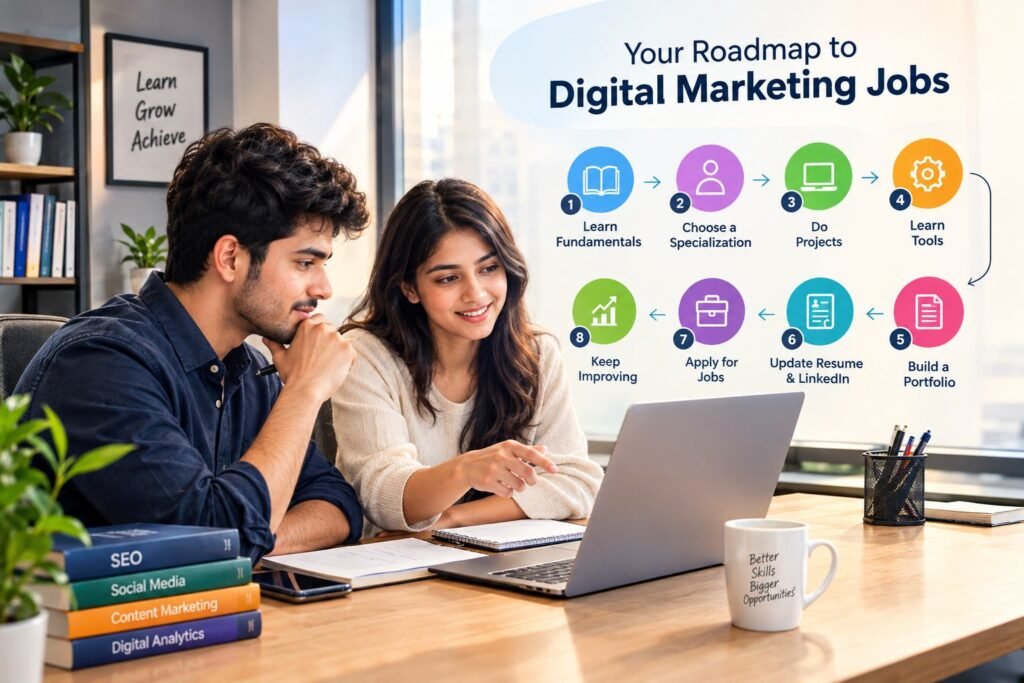
    Two young professionals discussing a digital marketing career roadmap, including learning skills, completing projects, building a portfolio, updating a resume, and applying for jobs.

    Digital Marketing Jobs Salary in India in 2026

    Salary depends on location, employer, experience, specialization, and job responsibilities. There is no single salary that applies to every role.

    The following figures are illustrative estimates, not verified 2026 market averages.

    Experience levelIllustrative annual salary
    Fresher or entry-level₹1.8–3.6 lakh
    1–3 years of experience₹3–6 lakh
    Experienced specialist₹6–12 lakh or more

    Actual offers may fall below or above these ranges. Specialized professionals with strong analytical, technical, or campaign-management skills may have different earning opportunities.

    Before applying, compare recent vacancies in your target city and review the responsibilities and salary information available for each position.

    For beginners, the first role can provide valuable experience. As your skills improve and you demonstrate results, you can explore more specialized Digital Marketing Jobs and greater responsibilities.

    How AI Is Changing Digital Marketing Careers

    Artificial intelligence is influencing how marketing teams research topics, plan campaigns, create content, and analyze data.

    AI tools can help with brainstorming, outlining, summarizing information, and generating creative variations. These capabilities may save time when used appropriately.

    However, AI-generated content and recommendations still require human review. Information may be inaccurate, generic, outdated, or unsuitable for a particular audience.

    People preparing for Digital Marketing Jobs should combine AI-assisted workflows with strong marketing fundamentals.

    For example, an SEO professional should understand search intent before preparing an AI-assisted content outline. A social media marketer should understand the audience before generating post ideas. An analyst should verify the underlying data before making recommendations.

    The goal is to use AI thoughtfully, not to depend on it without checking the results.

    How to Build Long-Term Career Growth

    Getting your first opportunity is only the beginning. Long-term progress requires continuous learning and a willingness to take on more responsibility.

    Here are practical ways to improve your career prospects:

    • Build deeper expertise: Develop strong skills in one area before expanding into others.
    • Study campaigns: Examine how businesses communicate with customers and measure performance.
    • Improve reporting: Learn to explain what the numbers mean and what action should follow.
    • Develop communication: Practise writing reports, presenting ideas, and explaining decisions.
    • Stay updated: Follow reliable industry resources and review changes to marketing platforms.
    • Document progress: Keep a record of completed projects, new skills, and measurable achievements.
    • Learn from feedback: Use constructive criticism to identify areas for improvement.

    Career growth is a gradual process. Consistent practice and useful work samples can help you demonstrate your progress to employers and prepare for more advanced Digital Marketing Jobs.

    Conclusion

    Digital Marketing Jobs offer several career paths for beginners in 2026, including SEO, social media marketing, content writing, performance marketing, email marketing, and analytics.

    The right opportunity depends on your interests, current abilities, and willingness to practise. Start by learning the fundamentals, choosing a specialization, building a portfolio, and applying for relevant entry-level positions.

    Do not wait until you know every tool or technique. Begin with small projects, learn from your mistakes, and improve your work over time. Practical abilities, clear communication, and continuous learning can help you become more confident and job-ready.

    If you want structured guidance while developing practical digital skills, exploring educational resources and training opportunities from Dizital Mantras may help you understand the field and plan your next learning steps.

    With consistent effort and realistic expectations, you can prepare for suitable opportunities and work toward a stronger career in digital marketing.
  • Instagram Marketing Services: Best Strategies to Grow Your Business in 2026

    Instagram Marketing Services: Best Strategies to Grow Your Business in 2026

    Instagram Marketing Services: Proven Strategies to Grow Your Business in 2026Instagram Marketing Services: Proven Strategies to Grow Your Business in 2026

    Instagram has become more than a platform for sharing photos and videos. Businesses now use it to promote products, explain services, connect with customers, and generate sales opportunities. However, simply creating an account is not enough. Businesses need a clear strategy to reach the right audience and turn attention into meaningful results.

    Instagram Marketing Services help businesses improve their profiles, create engaging content, publish Reels, manage advertising campaigns, and measure performance. With the right approach, Instagram can become a valuable part of a business’s digital marketing strategy.

    In 2026, the focus should not be limited to likes and followers. Businesses should prioritize audience engagement, customer trust, qualified leads, and conversions.

    What Are Instagram Marketing Services?

    Instagram Marketing Services are professional solutions that help businesses promote their brands and achieve marketing goals on Instagram. These services may include profile optimization, content creation, graphic design, Reels production, advertising, community management, and performance reporting.

    Different businesses have different needs. A clothing brand may require product photography and styling videos, while a restaurant may benefit from food Reels and local promotions. A service-based company may need educational posts that explain its expertise.

    Professional Instagram Marketing Services connect these activities with a clear plan. Instead of publishing random content, businesses can create posts that answer customer questions, demonstrate value, and encourage people to take action.

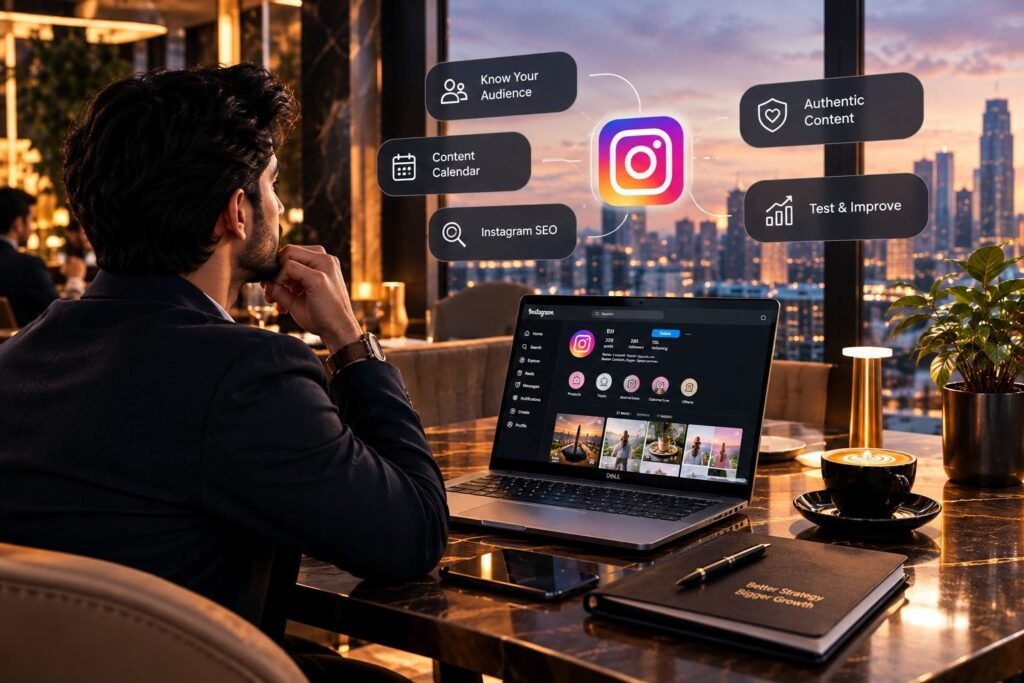
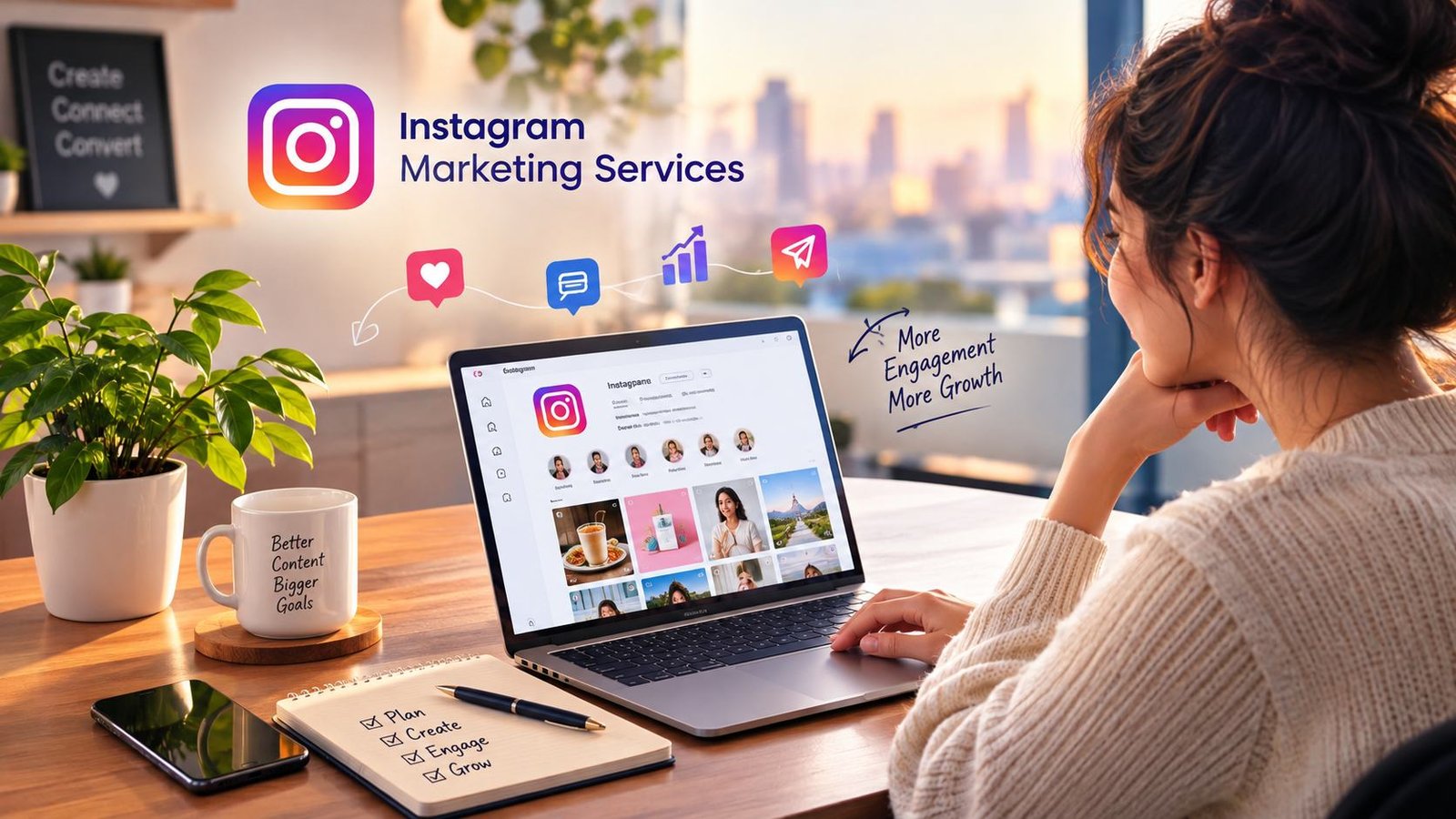
    Instagram Marketing Services for business growth in 2026, featuring a Dell laptop displaying an Instagram profile in a luxury workspace.

    Why Instagram Marketing Matters in 2026

    Competition for online attention continues to challenge businesses. Customers want useful information, authentic communication, and clear reasons to choose one brand over another.

    Here is why Instagram can be an important marketing channel.

    1. Build Brand Awareness

    Consistent colors, recognizable visuals, and a clear message help people remember your business. Regularly sharing useful content can introduce your brand to potential customers and strengthen recognition over time.

    2. Connect With Potential Customers

    Instagram allows businesses to communicate through comments, Stories, polls, and direct messages. These features can help brands answer questions, understand customer needs, and develop stronger relationships.

    3. Generate Leads and Sales

    A well-organized profile can encourage visitors to contact your business, request a quotation, book a consultation, or visit your website. For many businesses, these actions are more valuable than follower growth alone.

    4. Showcase Products and Services

    Demonstrations, tutorials, customer experiences, and behind-the-scenes videos can help people understand what you offer. Effective Instagram Marketing Services use these content formats to communicate benefits and build trust.

    What Do Instagram Marketing Services Include?

    The exact services depend on business goals, budget, and available resources.

    1. Instagram Profile Optimization

    Your profile should quickly explain what your business does and how customers can contact you.

    Profile optimization may include:

    • Writing a clear and informative bio.
    • Choosing a recognizable profile picture.
    • Adding relevant contact details.
    • Organizing Story Highlights.
    • Including a suitable website or booking link.
    • Communicating your main services clearly.

    A professional profile gives visitors a straightforward path from discovering your brand to learning more about your business.

    2. Content Strategy and Post Design

    A content strategy helps businesses publish consistent, relevant posts rather than creating content without a plan.

    Content can include educational carousels, product images, promotional graphics, customer testimonials, and short videos.

    A practical monthly calendar may include:

    • Educational posts that answer common questions.
    • Product and service demonstrations.
    • Frequently asked questions.
    • Customer stories shared with permission.
    • Company updates and behind-the-scenes content.

    Instagram Marketing Services can help organize these content types around customer interests and business objectives.

    3. Instagram Reels Creation

    Reels can communicate ideas through short videos, tutorials, demonstrations, and storytelling. Businesses do not always need expensive equipment to create useful videos.

    For example, a bakery can show how a product is prepared, while a digital marketing agency can explain a common SEO mistake.

    To improve your Reels strategy:

    • Begin with an interesting question or visual.
    • Focus on one main idea per video.
    • Use readable text and clear audio.
    • Show real products or practical solutions.
    • Include a relevant call to action.
    • Review available performance metrics.

    The goal is to create useful content for your audience instead of copying every popular trend.

    4. Instagram Ads Management

    Organic content and paid advertising serve different purposes. Organic posts help businesses communicate with their audience, while paid campaigns can extend reach and support specific objectives.

    Advertising support may include campaign planning, audience selection, creative development, budget management, and reporting.

    Before launching an advertisement, decide whether your goal is brand awareness, website traffic, lead generation, or sales. Monitor both spending and conversions to understand whether the campaign is producing useful results.

    5. Audience Engagement and Analytics

    Publishing content is only one part of social media marketing. Businesses also need to respond to comments, answer customer questions, and monitor incoming messages.

    Useful performance metrics include:

    • Reach and impressions.
    • Shares, saves, and engagement.
    • Profile visits and website clicks.
    • Qualified inquiries and leads.
    • Sales and conversion rates.

    Good Instagram Marketing Services use these insights to identify what is working and where improvements are needed.

    Best Instagram Marketing Strategies for Business Growth

    Businesses can improve results by combining useful content, consistent execution, and performance analysis.

    1. Understand Your Target Audience

    Identify the people most likely to purchase your products or services. Consider their interests, problems, location, budget, and buying preferences.

    For example, a local gym may publish beginner workout tips, while a home decoration business may share room styling ideas.

    When content addresses real customer needs, it becomes more relevant and useful.

    2. Create a Consistent Content Calendar

    A content calendar helps maintain a regular publishing schedule and reduces last-minute planning.

    Organize posts into educational content, product promotion, customer questions, brand stories, and interactive posts. Choose a schedule your team can maintain and adjust it based on audience response.

    3. Use Instagram SEO

    Instagram SEO can help people discover relevant profiles and content through search. Use descriptive profile information, meaningful captions, relevant keywords, and suitable hashtags.

    For example, a photographer can mention the city and type of photography offered. This provides useful context without repeating the same keyword unnaturally.

    4. Focus on Authentic Content

    Customers want to understand a business before contacting it. Share practical advice, product demonstrations, transparent explanations, and genuine customer experiences.

    Avoid exaggerated claims or misleading testimonials. Trust develops when a brand communicates consistently and provides credible information.

    5. Test and Improve Your Strategy

    There is no single posting schedule or content format that guarantees success for every business.

    Test different topics, video openings, formats, and calls to action. Review performance to discover what attracts relevant viewers and encourages meaningful actions.

    Effective Instagram Marketing Services should include regular evaluation rather than relying on assumptions.

    Best Instagram Marketing Strategies for Business Growth, featuring a professional man analyzing Instagram marketing strategies on a laptop in a luxury city-view restaurant.

    How to Choose the Right Instagram Marketing Agency

    Before hiring an agency, understand what it offers and how its work supports your business goals.

    Consider these factors:

    • Review its portfolio: Look for examples of relevant content and campaign work.
    • Confirm deliverables: Ask how many posts, Reels, Stories, and reports are included.
    • Understand the process: Clarify who plans content, approves designs, and manages campaigns.
    • Check reporting: Make sure performance reports explain meaningful results.
    • Discuss communication: Agree on updates, approvals, and response times.
    • Avoid unrealistic guarantees: No agency can guarantee viral content or specific sales results for every business.

    Choose a provider that explains its strategy, communicates clearly, and sets realistic expectations.

    How Much Do Instagram Marketing Services Cost in India?

    Pricing depends on the amount of work involved, the provider’s experience, content production requirements, and advertising campaign complexity.

    A business that needs occasional graphic posts may require a smaller package than one that needs frequent Reels, community management, advertising, and detailed analytics.

    Before selecting Instagram Marketing Services, request a clear breakdown of the package. Check whether the price includes content design, video editing, publishing, advertising management, and reporting.

    Also confirm whether the advertising budget is separate from the agency’s service fee. Compare providers based on quality, deliverables, and suitability for your goals—not price alone.

    Instagram Marketing Services

    Common Instagram Marketing Mistakes to Avoid

    Businesses can waste time and money when their activities lack direction.

    Avoid these common mistakes:

    • Publishing without understanding your audience.
    • Copying competitors instead of building a distinct brand.
    • Focusing only on follower numbers.
    • Using irrelevant hashtags and repetitive captions.
    • Ignoring comments and direct messages.
    • Running advertisements without clear objectives.
    • Failing to review performance regularly.

    A consistent plan and regular analysis can help businesses avoid these problems and make better marketing decisions.

    Conclusion

    Instagram offers businesses opportunities to build brand awareness, communicate with potential customers, and generate new sales opportunities. Sustainable growth, however, requires more than attractive posts. Businesses need relevant content, consistent engagement, clear objectives, and reliable performance measurement.

    Instagram Marketing Services bring these activities together through profile optimization, content planning, Reels creation, advertising management, and analytics. Choosing the right strategy can help businesses focus on meaningful outcomes rather than vanity metrics.

    At Dizital Mantras, readers can explore practical digital marketing strategies and learn how to strengthen their online presence. Start with a clear goal, create content that genuinely helps your audience, and improve your approach using performance insights.

  • Best AI Marketing Tools for Digital Marketers in 2026

    Best AI Marketing Tools for Digital Marketers in 2026

    Digital marketing is changing faster than ever in 2026. Marketers are now using artificial intelligence to research audiences, create content, improve SEO, manage social media, analyze data, and automate repetitive tasks.

    The growing use of AI Marketing Tools is helping businesses and digital marketers work faster while making more data-driven decisions. However, with hundreds of AI solutions available, choosing the right tool can be difficult.

    This guide covers some of the best AI Marketing Tools that digital marketers can consider in 2026 and explains how they can solve common marketing challenges.

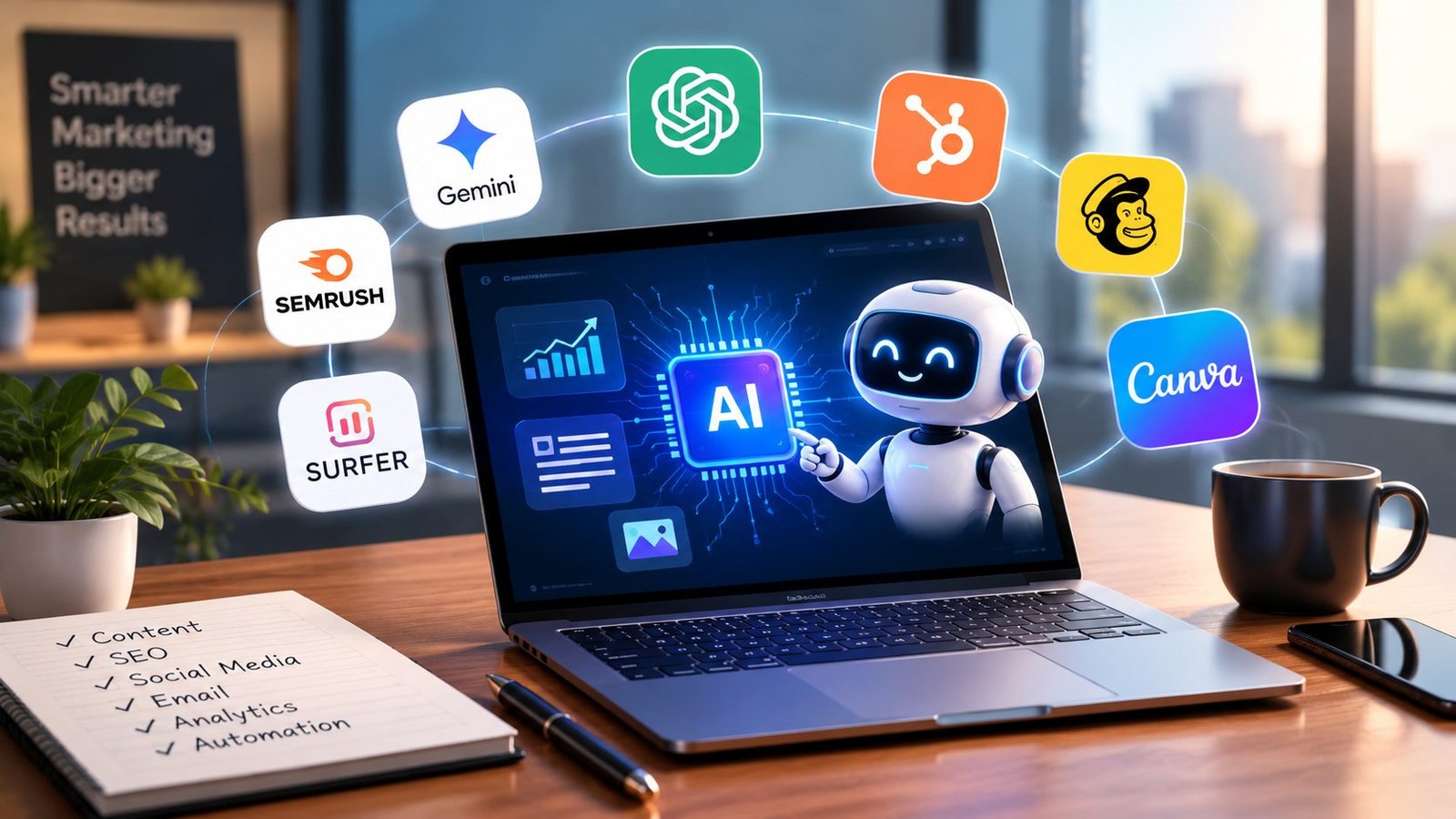
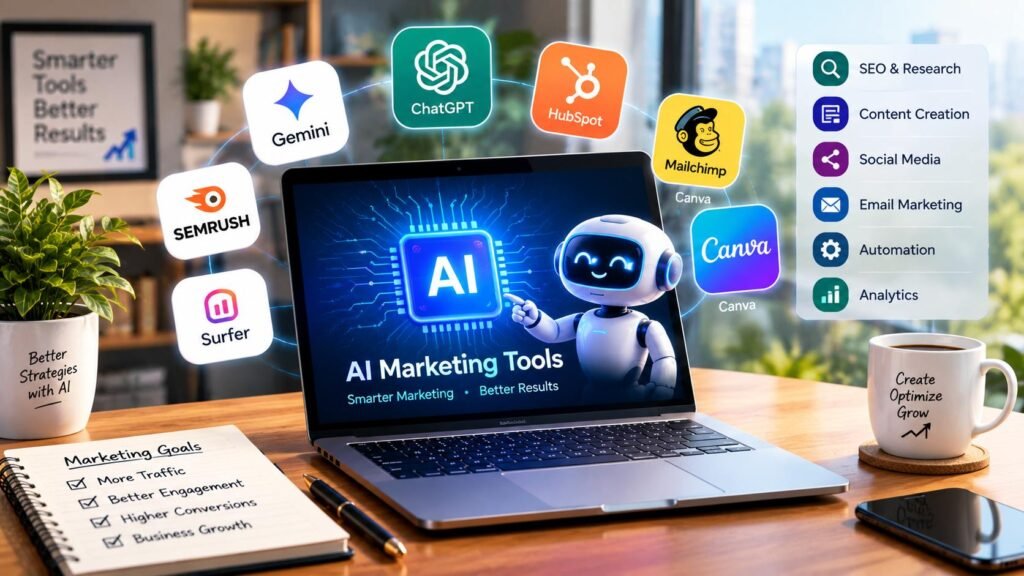
    AI Marketing Tools for digital marketers in 2026 with AI-powered laptop, SEO, content creation, social media, email marketing, automation, and analytics.

    Why AI Marketing Tools Matter in 2026

    Traditional digital marketing often requires marketers to spend hours on research, content creation, reporting, keyword analysis, and campaign management.

    AI can reduce the time spent on many of these repetitive activities.

    Modern AI Marketing Tools can help marketers:

    • Generate and improve marketing content
    • Find useful keyword and SEO opportunities
    • Analyze customer behavior
    • Create social media content
    • Automate email campaigns
    • Generate marketing ideas
    • Improve advertising performance
    • Summarize large amounts of data
    • Personalize customer experiences

    The goal is not to replace marketers. Instead, AI can help marketers spend more time on strategy, creativity, and decision-making.

    The Problem: Too Many AI Marketing Tools

    One of the biggest problems for marketers in 2026 is not a lack of technology. It is choosing the right technology.

    There are tools for almost every marketing task. Some focus on SEO, while others specialize in content, social media, email, advertising, analytics, or automation.

    Using too many tools can create unnecessary costs and complicated workflows.

    A better approach is to identify the marketing problem first and then choose an AI solution that addresses it.

    Best AI Marketing Tools for Digital Marketers

    1. ChatGPT – AI for Content and Marketing Ideas

    ChatGPT can support marketers with content research, brainstorming, outlines, copywriting, summaries, and campaign ideas.

    It can also help create different versions of headlines, social media posts, email drafts, and content briefs.

    Best for:

    • Content ideas
    • Marketing copy
    • Brainstorming
    • Content outlines
    • Customer research questions

    Marketers should still review AI-generated content for accuracy, originality, brand voice, and usefulness.

    2. Google Gemini – Research and Marketing Assistance

    Google Gemini can help marketers with brainstorming, research-oriented tasks, content planning, and working with information across Google’s ecosystem.

    It can be useful when marketers need to explore a topic, compare ideas, or develop an initial content strategy.

    Best for:

    • Research assistance
    • Content planning
    • Brainstorming
    • Marketing analysis
    • Productivity

    Its usefulness becomes stronger when marketers provide clear instructions and specific context.

    3. Semrush – SEO and Competitive Research

    Semrush is a popular digital marketing platform that includes AI-powered features alongside its traditional SEO and marketing capabilities.

    It can help marketers research keywords, analyze competitors, monitor rankings, and identify content opportunities.

    Best for:

    • Keyword research
    • Competitor analysis
    • SEO research
    • Content planning
    • Website performance monitoring

    For SEO professionals, combining AI assistance with real search and competitor data can lead to better decisions than relying on AI-generated suggestions alone.

    4. Surfer – AI-Assisted SEO Content Optimization

    Surfer focuses on SEO content optimization. It can help marketers analyze search results and improve content based on relevant search-related factors.

    It is particularly useful when a marketer already has a draft and wants to optimize it for a target search query.

    Best for:

    • Content optimization
    • On-page SEO
    • Content planning
    • SEO-focused writing

    The tool should support the content strategy rather than encourage marketers to write only for search engines.

    5. Canva – AI-Powered Visual Marketing

    Visual content is important for websites, social media, advertisements, presentations, and marketing campaigns.

    Canva provides AI-powered features that can help marketers create and edit visual content more efficiently.

    AI Marketing Tools for digital marketers with an HP laptop on a wooden table overlooking a peaceful beach at sunset.

    Best for:

    • Social media graphics
    • Marketing designs
    • Presentations
    • Advertisements
    • Visual content

    It is especially useful for small businesses and marketers who need professional-looking designs without advanced graphic design skills.

    6. HubSpot – AI for Marketing Automation

    HubSpot combines CRM, marketing, sales, and customer service functionality with AI features.

    Its AI capabilities can assist with content creation, customer communication, automation, and marketing workflows.

    Best for:

    • Marketing automation
    • CRM workflows
    • Email marketing
    • Customer management
    • Campaign planning

    This type of platform can be valuable for businesses that want marketing activities and customer information in one ecosystem.

    7. Mailchimp – AI-Assisted Email Marketing

    Email remains an important channel for customer communication.

    Mailchimp provides AI-related capabilities that can help marketers with email content, audience targeting, campaign optimization, and automation.

    Best for:

    • Email campaigns
    • Customer communication
    • Marketing automation
    • Audience segmentation

    AI can help improve efficiency, but marketers should still focus on creating useful and relevant emails instead of sending unnecessary messages.

    How to Choose the Right AI Marketing Tools

    Choosing tools based only on popularity can lead to wasted time and money.

    Instead, consider your specific marketing goals.

    1. Identify Your Main Problem

    Ask what you actually need help with.

    For example:

    • Need better SEO research? Choose an SEO-focused platform.
    • Need content ideas? Use an AI writing assistant.
    • Need better designs? Consider an AI-powered design platform.
    • Need automation? Look for a marketing automation solution.

    2. Check Features Before Pricing

    A cheaper tool is not always better.

    Compare features, limitations, integrations, ease of use, and whether the tool fits your existing workflow.

    3. Protect Customer Data

    Before connecting customer information to an AI platform, understand its privacy policies, data controls, and business terms.

    Sensitive business or customer information should not be entered into an AI service without understanding how that information is handled.

    4. Keep Human Review

    AI-generated content can contain incorrect information, repetitive language, or unsuitable recommendations.

    Human review is essential for:

    • Accuracy
    • Brand voice
    • Originality
    • Fact-checking
    • Strategic decisions

    A Simple AI Marketing Workflow for 2026

    You do not need dozens of AI Marketing Tools to build an effective workflow.

    A simple process could look like this:

    Research → Strategy → Content Creation → Optimization → Distribution → Analytics → Improvement

    For example, a marketer can use an SEO platform for research, an AI assistant for brainstorming, a design platform for visuals, and analytics tools for measuring results.

    The important thing is how these tools work together.

    Benefits of Using AI Marketing Tools

    When used correctly, AI Marketing Tools can provide several advantages.

    Save Time

    AI can handle many repetitive tasks and help marketers complete initial drafts and research faster.

    Improve Productivity

    Marketers can use AI to organize ideas, summarize information, and accelerate content workflows.

    Support Personalization

    AI can help marketers understand audience segments and create more relevant messaging.

    Make Better Data-Driven Decisions

    AI can process large amounts of information and highlight patterns that may deserve further investigation.

    Scale Marketing Activities

    Small teams can use automation and AI assistance to manage more marketing activities without increasing manual work at the same rate.

    AI Marketing Tools on an HP laptop used by a marketer in a peaceful mountain forest landscape, featuring ChatGPT, Gemini, and Semrush.

    Limitations of AI Marketing Tools

    AI is powerful, but it is not perfect.

    Some important limitations include:

    • AI can produce inaccurate information.
    • Generated content may sound generic.
    • Tools may require paid subscriptions for advanced features.
    • Different tools may produce inconsistent results.
    • Over-automation can reduce the human element of marketing.
    • Privacy and data security require careful attention.

    Therefore, AI should be treated as a marketing assistant rather than an automatic replacement for expertise.

    Future of AI Marketing Tools

    The role of AI Marketing Tools is likely to become more connected with automation, analytics, personalization, and marketing workflows.

    Instead of using AI only to generate text, marketers are increasingly using it to support complete processes—from research and planning to execution and measurement.

    The marketers who benefit most will not necessarily be those who use the largest number of tools. They will be the ones who understand how to combine AI capabilities with strong marketing fundamentals.

    Conclusion

    The best AI Marketing Tools are not necessarily the tools with the most features. The right choice depends on your goals, budget, workflow, and marketing requirements.

    Tools such as ChatGPT, Google Gemini, Semrush, Surfer, Canva, HubSpot, and Mailchimp can support different areas of digital marketing, from content and SEO to design, automation, and email campaigns.

    However, successful digital marketing still requires human creativity, strategy, critical thinking, and continuous learning.

    For marketers building practical digital skills in 2026, resources and learning communities such as Dizital Mantras can also be useful for staying focused on the changing digital marketing landscape.

    The future of marketing is not simply about using AI. It is about using AI intelligently to create better experiences, stronger strategies, and measurable results.

  • 7 Powerful Benefits of a Content Writing Course for Beginners in 2026

    7 Powerful Benefits of a Content Writing Course for Beginners in 2026

    The demand for quality content continues to grow in 2026. Businesses use content to attract customers, explain their services, build trust, improve online visibility, and connect with their audiences.

    For anyone starting a digital career, writing is a useful skill to develop. A content writing course can help beginners learn how professional content is planned, written, optimized, edited, and published.

    But learning to write is not only about improving grammar. Modern content writing also involves understanding readers, search engines, digital platforms, and the purpose of each piece of content.

    So, is learning content writing a useful choice for beginners in 2026?

    Yes. It can be a strong starting point for people interested in freelancing, digital marketing, blogging, website content, or other online career opportunities.

    Let’s explore the 7 powerful benefits of a content writing course and see how this skill can help beginners build a strong digital career foundation.

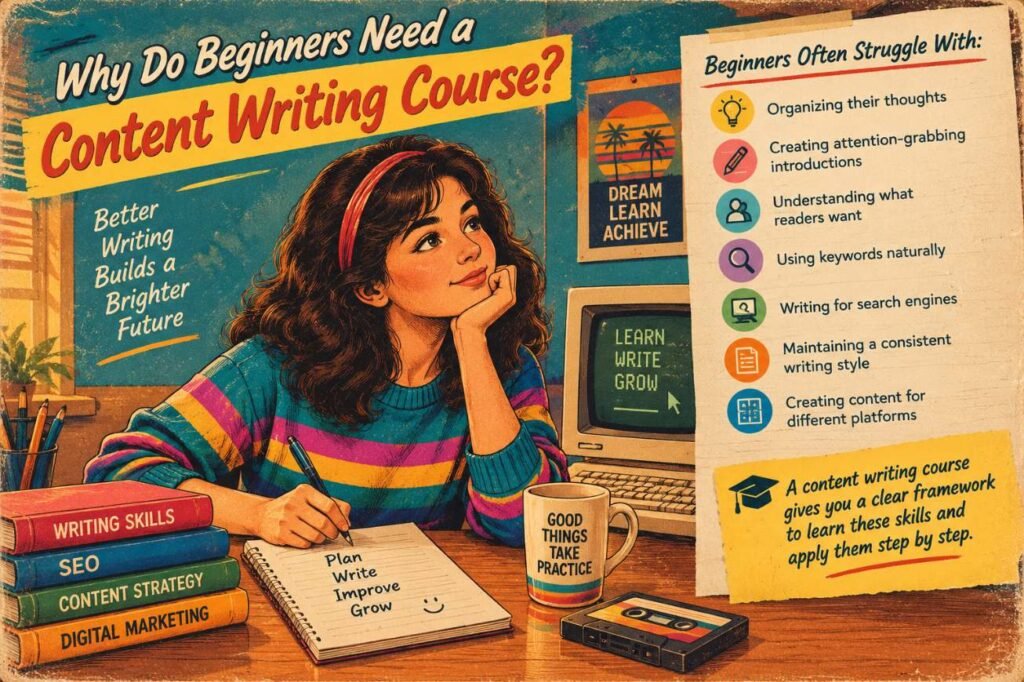
    Why Do Beginners Need a Content Writing Course?

    Many beginners start writing without knowing what makes online content effective.

    They may have good ideas but still struggle with:

    • Organizing their thoughts
    • Creating attention-grabbing introductions
    • Understanding what readers want
    • Using keywords naturally
    • Writing for search engines
    • Maintaining a consistent writing style
    • Creating content for different platforms

    Writing regularly can improve your skills, but a structured learning approach can help you understand why certain writing techniques work.

    A content writing course can give beginners a clear framework to learn these skills and apply them through practice.

    80s-style illustration of a beginner learning content writing, with writing skills, SEO, content strategy, and digital marketing concepts

    1. Strengthen Your Professional Writing Skills

    Good content starts with good communication.

    One key advantage of a content writing course is that it can help beginners develop a clear and professional writing style.

    You can learn how to present information in a simple, organized, and reader-friendly way.

    Depending on the course, you may practice:

    • Blog and article writing
    • Website copy
    • Social media posts
    • Email content
    • Product descriptions
    • Basic copywriting
    • Content editing

    The goal is not to use complicated vocabulary. Professional writing focuses on making ideas easy to understand.

    These writing skills can also be useful beyond content-related jobs because clear communication is valuable in almost every professional environment.

    2. Learn the Basics of SEO Writing

    Creating useful content is only one part of digital writing. Your content also needs to reach the right audience.

    Search Engine Optimization, or SEO, helps content become more discoverable through search engines.

    A content writing course with SEO training can introduce beginners to important concepts such as:

    • Keyword research
    • Search intent
    • Keyword placement
    • SEO-friendly headings
    • Meta descriptions
    • Internal links
    • Content organization
    • Readability

    Before writing an article, you can research what users are searching for and create content that directly answers their questions.

    This approach can make your writing more useful to both readers and search engines.

    3. Create Opportunities for Freelancing

    Freelancing is another area where writing skills can be useful.

    Businesses, websites, agencies, and entrepreneurs often need content for their online activities. Beginners can eventually offer writing services based on their strengths.

    A content writing course can help you understand the fundamentals before approaching clients.

    Possible freelance services include:

    • SEO blog writing
    • Website content
    • Social media writing
    • Product descriptions
    • Email content
    • Article writing
    • Content proofreading and editing

    However, completing a course does not automatically make someone a successful freelancer.

    You still need a portfolio, professional communication, deadline management, an understanding of client requirements, and continuous practice.

    4. Build a Portfolio That Shows Your Skills

    One of the biggest challenges for new writers is proving what they can do.

    A resume can list your skills, but a portfolio can demonstrate them.

    During a content writing course, beginners can create samples that showcase different writing abilities.

    Your portfolio could include:

    • Blog posts on different subjects
    • SEO-based articles
    • Website pages
    • Social media content
    • Product descriptions
    • Short-form and long-form writing

    Try to show variety instead of creating several pieces that look the same.

    A well-organized portfolio gives employers and potential clients something practical to evaluate when considering you for a project or entry-level opportunity.

    or anyone starting a digital career, writing is a useful skill to develop. A content writing course can help beginners learn how professional content is planned, written, optimized, edited, and published.

But learning to write is not only about improving grammar. Modern content writing also involves understanding readers, search engines, digital platforms, and the purpose of each piece of content.

So, is learning content writing a useful choice for beginners in 2026?

Yes. It can be a strong starting point for people interested in freelancing, digital marketing, blogging, website content, or other online career opportunities.

Let's explore the 7 powerful benefits of a content writing course and see how this skill can help beginners build a strong digital career foundation.

    5. Learn How Different Content Formats Work

    A common misconception is that content writing only means writing blogs.

    In reality, digital businesses use many content formats.

    A content writing course can help you understand how writing changes according to the platform and purpose.

    Blog Content

    Blogs can educate readers, answer questions, and support a website’s organic search strategy.

    Website Content

    Website pages explain a company’s services, products, values, and solutions to potential customers.

    Social Media Content

    Social posts need to communicate ideas quickly while capturing attention and encouraging engagement.

    Email Content

    Emails can be used for newsletters, customer communication, product updates, and marketing campaigns.

    Product Descriptions

    Product descriptions provide information that helps online shoppers understand what they are buying.

    Understanding these formats can help you become a more flexible writer instead of being limited to one type of content.

    Different content formats including blog writing, website content, social media posts, email content, and product descriptions

    6. Develop Better Research and Planning Habits

    Writing without research can result in weak or repetitive content.

    Professional writers need to understand their topic before they start drafting.

    A content writing course can help beginners develop a systematic approach to research and planning.

    You can learn how to:

    • Understand the target audience
    • Research a topic before writing
    • Find useful information
    • Compare competing content
    • Create an article outline
    • Organize information logically
    • Check facts before publishing

    Good research gives your content more depth.

    It also helps you avoid repeating information that readers can find everywhere else.

    7. Explore Different Digital Career Paths

    Content writing can be useful on its own, but it can become even more valuable when combined with other digital skills.

    A content writing course can give beginners a foundation that connects with several career options.

    Depending on your interests and experience, you could explore roles such as:

    • Content Writer
    • SEO Writer
    • Blog Writer
    • Copywriter
    • Content Marketing Executive
    • Social Media Content Writer
    • Website Content Writer
    • Freelance Writer

    You can also combine content skills with SEO, social media marketing, email marketing, analytics, or digital advertising.

    This combination can help you build a broader skill set for the changing digital job market.

    What Should Beginners Check Before Choosing a Content Writing Course?

    Choosing the right course is important.

    Instead of selecting a course only because of its title or price, check what you will actually learn.

    A useful content writing course should ideally cover:

    • Writing fundamentals
    • SEO basics
    • Keyword research
    • Search intent
    • Content planning
    • Editing and proofreading
    • Different content formats
    • Practical assignments
    • Portfolio creation
    • Modern content workflows

    It is also useful to understand how AI tools fit into content creation.

    In 2026, AI can assist with brainstorming, research, outlines, editing, and idea generation. However, writers still need to verify information, add original insights, understand their audience, and maintain quality.

    Using AI as an assistant rather than replacing your own thinking can help you develop stronger content skills.

    Choosing a content writing course with SEO, keyword research, content planning, portfolio building, and AI tools

    How Can Beginners Get Better Results From a Content Writing Course?

    Learning concepts is only the beginning.

    You need to apply them regularly if you want to improve.

    A simple practice routine can be:

    1. Learn one new writing technique.
    2. Choose a topic related to your interests.
    3. Create a short content piece.
    4. Review grammar, structure, and readability.
    5. Check whether the content satisfies the reader’s intent.
    6. Improve the draft and save it for your portfolio.

    You can repeat this process with blogs, website pages, social media posts, and other formats.

    Regular practice can gradually turn theoretical knowledge into practical writing ability.

    Conclusion

    A content writing course can be a useful starting point for beginners who want to develop digital skills in 2026.

    It can help you become a better writer, understand SEO, work with different content formats, develop research habits, create a portfolio, and explore opportunities in freelancing and digital marketing.

    But completing a course should not be the final goal.

    Real progress comes from applying what you learn to real projects. Write regularly, experiment with different formats, learn from feedback, and keep updating your skills as the digital world changes.

    At Digital Mantras, the focus is on learning practical digital skills that can be understood and applied in real-world situations.

    Keep learning, keep experimenting, and turn your knowledge into skills that can support your career growth.

    ou don’t seem to be using a Table of Contents plugin.

  • 7 Skills You Can Learn in a Content Creation Course Using PowerPoint in 2026

    7 Skills You Can Learn in a Content Creation Course Using PowerPoint in 2026

    Content creation has become an important digital skill for students, professionals, freelancers, creators, and businesses. From social media posts and presentations to videos, educational content, and marketing materials, organizations need people who can communicate ideas clearly through digital content.

    A content creation course can help beginners understand how to plan, create, design, and improve different types of content. One of the most useful tools for learning these skills is Microsoft PowerPoint. Although PowerPoint is traditionally known as a presentation tool, it can also be used to create social media graphics, visual content, educational slides, portfolios, infographics, and other digital assets.

    In 2026, learning content creation is not only about knowing how to use a software tool. It is about combining creativity, communication, design thinking, research, and digital marketing knowledge to create content that has a clear purpose.

    Here are seven important skills you can develop through a content creation course while using PowerPoint as a practical design and content creation tool.

    Content creation course using PowerPoint for social media, video, infographic and digital content skills

    1. Presentation Design Skills

    One of the first skills you can develop is presentation design.

    A good presentation is more than putting text on slides. It should communicate information in a simple, organized, and visually attractive way. A content creation course can teach you how to structure information and turn ideas into engaging presentations.

    With PowerPoint, you can learn how to:

    • Create professional slide layouts
    • Use headings and subheadings effectively
    • Combine text with images and graphics
    • Maintain visual consistency
    • Use charts and diagrams
    • Create simple visual storytelling
    • Organize information logically

    For example, instead of creating a slide containing a long paragraph, you can divide the information into short points and support them with icons, images, or diagrams.

    These skills can be useful for students preparing academic presentations, employees creating business reports, trainers preparing lessons, and freelancers designing presentations for clients.

    2. Visual Content Creation

    Visual content plays an important role in digital communication. People often understand information faster when it is presented through visuals rather than large blocks of text.

    A content creation course can introduce you to basic principles of visual communication, including layout, typography, spacing, alignment, and visual hierarchy.

    PowerPoint can be surprisingly useful for creating different types of visual content. You can create:

    • Social media graphics
    • Quote posts
    • Infographics
    • Educational slides
    • Promotional banners
    • Simple posters
    • Digital worksheets
    • Portfolio pages

    For instance, a single PowerPoint slide can be designed as an Instagram or LinkedIn graphic by selecting an appropriate slide size and arranging text and visuals carefully.

    The important skill is not simply learning where to click in PowerPoint. You need to understand why certain fonts, images, layouts, and visual elements work better than others.

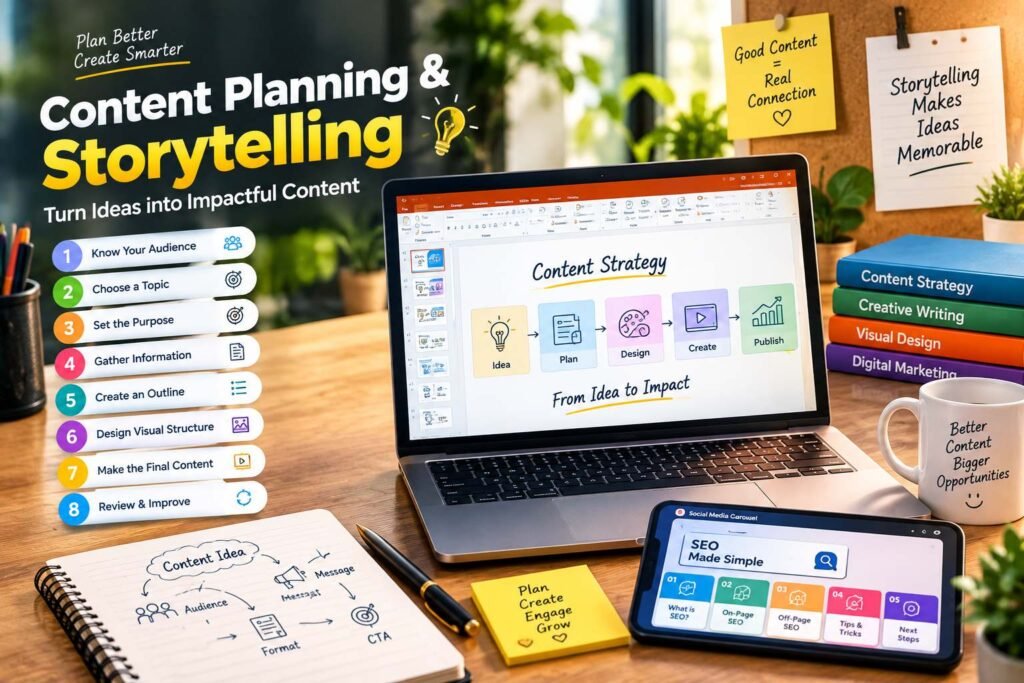
    3. Content Planning and Storytelling

    Creating attractive content is useful, but content also needs a clear message.

    Content planning and storytelling help you decide what you want your audience to understand, feel, or do after viewing your content.

    A good content creation course can help you develop a process for moving from an idea to a finished piece of content.

    A simple content planning process can include:

    1. Define the target audience.
    2. Choose the main topic.
    3. Identify the purpose of the content.
    4. Collect relevant information.
    5. Create an outline.
    6. Develop the visual structure.
    7. Create the final content.
    8. Review and improve it.

    PowerPoint can support this process by allowing you to create storyboards before producing the final content.

    For example, if you want to create an educational social media carousel about SEO, you can use individual PowerPoint slides to plan the introduction, key points, examples, conclusion, and call to action.

    This approach helps you avoid creating random content without a clear direction.

    Content planning and storytelling process using PowerPoint for creating engaging digital content

    4. Infographic and Data Visualization Skills

    Information can sometimes be difficult to understand when it is presented only as text.

    Infographics and data visualization can make complex information easier to understand. During a content creation course, you can learn how to transform information into simple visual formats.

    PowerPoint provides tools such as:

    • Shapes
    • SmartArt
    • Charts
    • Icons
    • Tables
    • Diagrams
    • Timelines

    These tools can be combined to create informative visuals.

    For example, instead of explaining a five-step marketing process in a long paragraph, you can create a five-step visual timeline. Similarly, numerical information can be represented through charts rather than a large table of figures.

    The key is to avoid adding unnecessary visual elements. A good infographic should make information easier to understand, not make the slide more complicated.

    5. Social Media Content Creation

    Social media has created a large demand for people who can produce consistent and engaging content.

    A modern content creation course may cover different content formats used across platforms such as LinkedIn, Instagram, YouTube, Facebook, and other digital channels.

    PowerPoint can be used to create many types of social media content, including:

    • LinkedIn carousel posts
    • Educational graphics
    • Instagram carousel designs
    • Promotional visuals
    • Event announcements
    • Tips and checklist posts
    • Personal branding content

    For example, a LinkedIn carousel can begin with a strong headline, followed by several educational slides and finish with a clear conclusion or call to action.

    The skill here is understanding that every platform has its own audience, format, and content style. A successful creator should know how to adapt the same idea into different formats.

    6. Video and Motion-Based Content Skills

    Content creation is increasingly moving beyond static images. Short-form videos, animated presentations, tutorials, and visual explainers are now common forms of digital communication.

    PowerPoint includes features that can help beginners understand basic concepts related to motion and visual sequencing.

    A content creation course can introduce you to ideas such as:

    • Slide transitions
    • Object animations
    • Visual sequencing
    • Presentation timing
    • Screen recording
    • Voice-over planning
    • Video storytelling

    These skills can help you understand how static content can be converted into a simple video format.

    For example, you can create a short educational presentation in PowerPoint, add animations and transitions, record narration, and export the presentation as a video.

    However, animation should support the message rather than distract from it. Professional content generally uses movement with a clear purpose.

    7. Personal Branding and Portfolio Creation

    Learning content creation can also help you build your professional identity.

    Whether you are a student, freelancer, digital marketer, designer, trainer, or aspiring creator, a portfolio can demonstrate your skills more effectively than simply listing them on a resume.

    A content creation course can help you understand how to create and organize examples of your work.

    PowerPoint can be used to create:

    • Personal portfolios
    • Case studies
    • Project presentations
    • Service presentations
    • Resume presentations
    • Brand guidelines
    • Client proposals

    For example, a freelancer could create a portfolio showing social media designs, presentation samples, content calendars, and previous projects.

    A strong portfolio should focus on quality and relevance. Instead of adding every piece of work you have created, select projects that demonstrate your strongest skills.

    Why Learn Content Creation Skills in 2026?

    The digital environment continues to change, and businesses need content for websites, search engines, social media, email campaigns, presentations, advertisements, and online communities.

    This means content creation is becoming a useful skill across many career paths.

    A content creation course can provide a structured way to learn instead of trying to understand everything through random tutorials.

    It can also help you connect different skills. For example, you might combine:

    Content Writing + Graphic Design + PowerPoint + Social Media + Digital Marketing

    This combination can make your skill set more useful for internships, freelance projects, marketing roles, and personal branding.

    At the same time, technology and AI tools are changing the content creation process. Creators can now use AI for brainstorming, research assistance, content variations, and workflow support. However, human skills such as creativity, editing, audience understanding, visual judgment, and fact-checking remain important.

    Content creation skills in 2026 including content writing, graphic design, PowerPoint, social media, digital marketing and AI tools

    What Should You Look for in a Content Creation Course?

    Not every course will provide the same learning experience. Before choosing one, check whether the course includes practical projects rather than only theoretical lessons.

    A useful content creation course should ideally cover areas such as:

    • Content planning
    • Copywriting basics
    • Visual design principles
    • PowerPoint or presentation design
    • Social media content
    • Basic video content
    • Branding
    • Content strategy
    • Practical assignments
    • Portfolio development

    You should also check whether the course is updated regularly. Digital platforms and content formats change quickly, so learning material should reflect current practices.

    Most importantly, look for a course that gives you opportunities to create actual projects. Practical work helps you understand how the skills are used outside the classroom.

    Conclusion

    Content creation is a broad digital skill that combines creativity, communication, design, planning, and technology. PowerPoint can be a useful starting point because it provides beginners with practical tools for creating presentations, graphics, infographics, social media posts, portfolios, and even basic video content.

    A content creation course can help you develop these skills in a structured way and understand how individual skills connect to a larger content strategy. Learning through practical projects and guidance, such as the kind of hands-on approach offered by Digital Mantra, can also help beginners understand how these skills can be applied to real-world digital content.

    The seven skills discussed in this article—presentation design, visual content creation, content planning, data visualization, social media content creation, video and motion-based content, and personal branding—can help you build a strong foundation.

    If you are starting your digital career in 2026, focus on practice rather than simply collecting certificates. Create projects, build a portfolio, experiment with different content formats, learn from feedback, and keep improving your skills.

    The goal is not just to learn PowerPoint or another tool. The real goal is to learn how to turn an idea into useful, clear, and engaging content that connects with your audience.

  • Digital Marketing Jobs for Freshers: Roles, Skills, Salary & Career Guide

    Digital Marketing Jobs for Freshers: Roles, Skills, Salary & Career Guide

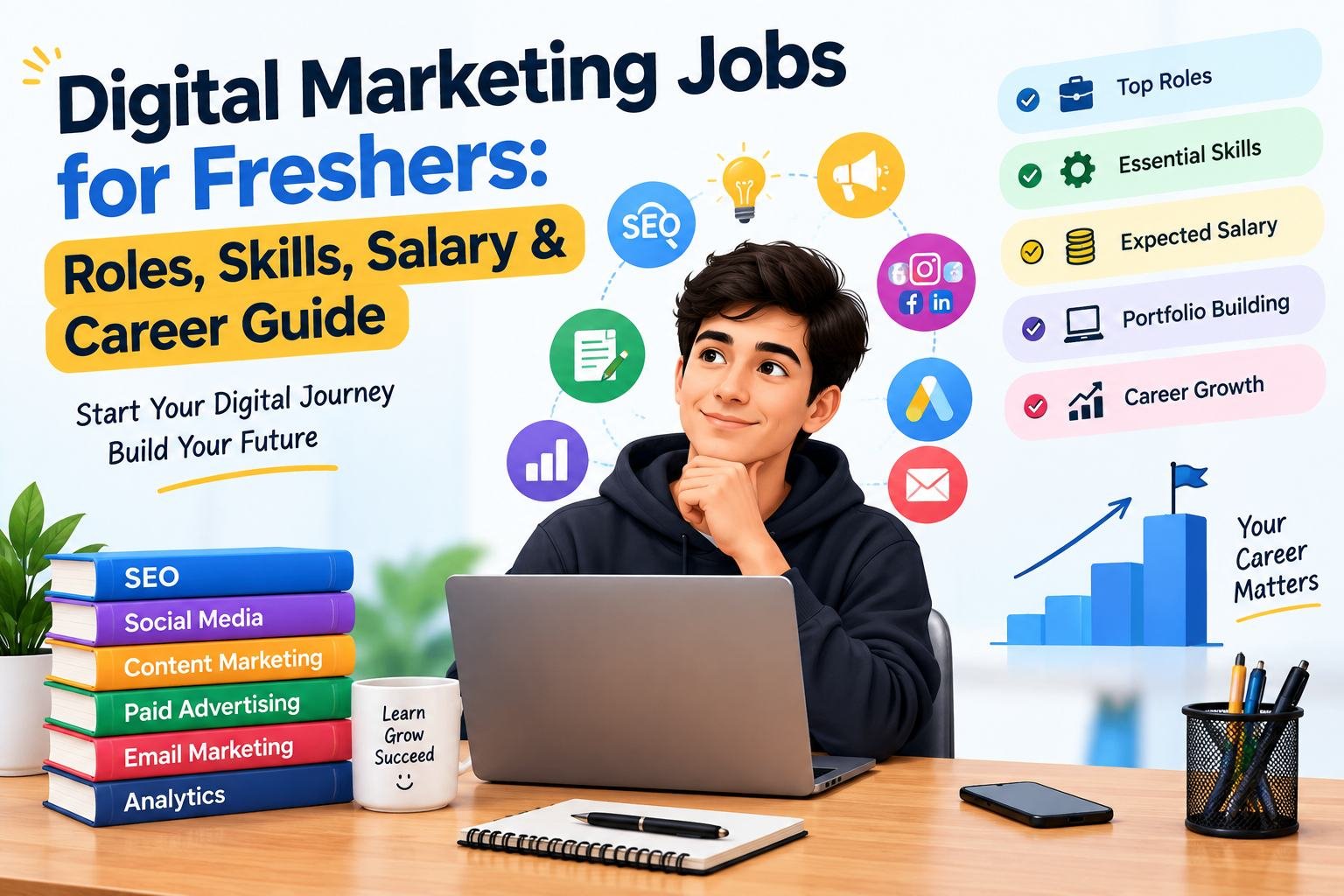
    There are many digital marketing jobs for freshers across SEO, social media, content, paid advertising, email marketing, and analytics. You do not need to master every area before applying. With practical experience, you can start building a career.

    This guide explains roles, skills, portfolio building, salary factors, and steps for getting your first opportunity.

    What Are Digital Marketing Jobs for Freshers?

    Digital marketing jobs for freshers are entry-level positions where beginners help businesses promote products, services, or brands through online channels.

    Depending on the company, a fresher may work on SEO, social media, content creation, paid advertising, email campaigns, website performance, or analytics.

    Many digital marketing jobs for freshers have titles such as:

    • Digital Marketing Executive
    • SEO Executive
    • Social Media Executive
    • Content Marketing Executive
    • PPC Executive
    • Email Marketing Executive
    • Digital Marketing Intern

    Responsibilities vary by company, so read the job description.

    Retro 80s-style illustration of a fresher exploring digital marketing jobs, with a laptop, SEO, social media, content, ads, analytics, and various entry-level marketing roles.

    Best Digital Marketing Jobs for Freshers

    For many beginners, digital marketing jobs for freshers provide a practical entry into online marketing.
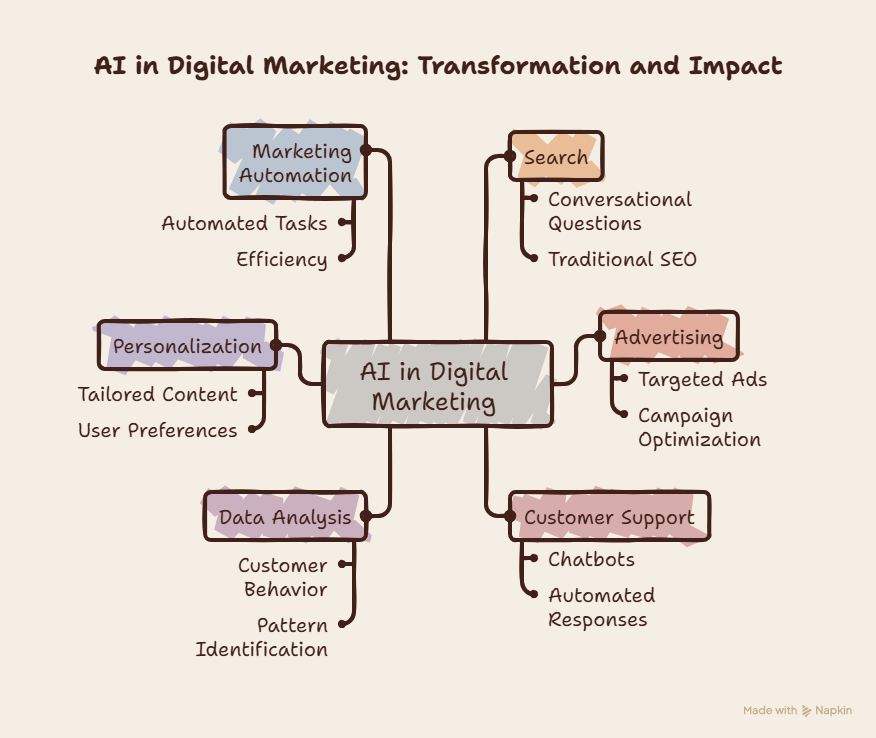
    1. Digital Marketing Executive

    A Digital Marketing Executive may assist with SEO, social media, content, email campaigns, website updates, analytics, and online promotions. It can be a useful starting role because you get exposure to multiple areas before choosing a specialization.

    2. SEO Executive

    An SEO Executive helps improve a website’s visibility in organic search results. Beginner responsibilities can include keyword research, on-page optimization, content optimization, internal linking, basic technical SEO checks, competitor research, and performance monitoring.

    If you enjoy research, writing, websites, and search behavior, SEO can be a suitable direction.

    3. Social Media Executive

    Social Media Executives help businesses maintain and grow their presence on social platforms. Their work may include content ideas, posts, content calendars, engagement monitoring, audience interactions, and performance analysis.

    Creativity, communication, consistency, and knowledge of social platforms are useful skills.

    4. Content Marketing Executive

    Content marketing focuses on creating useful content for a specific audience. A beginner may work on blog posts, website content, social media captions, articles, and content calendars.

    If you enjoy writing and explaining ideas clearly, content marketing can develop both writing and marketing skills.

    5. PPC or Google Ads Executive

    PPC professionals work with paid advertising campaigns. A fresher may assist with keyword research, campaign setup, ad copy, audience targeting, performance tracking, and basic optimization.

    This area can suit people who enjoy numbers, testing, data analysis, and measurable results.

    6. Email Marketing Executive

    Email marketing professionals communicate with existing and potential customers through email campaigns. Entry-level work may include newsletters, email lists, campaign content, performance monitoring, and basic automation.

    What Skills Do Freshers Need for Digital Marketing Jobs?

    These skills can improve your chances of getting digital marketing jobs for freshers.

    You do not need to master every skill before applying. Build a strong foundation and develop one or two areas more deeply.

    SEO

    Understand keyword research, on-page SEO, internal linking, content optimization, and basic technical concepts.

    Content Writing

    Learn to write clear, useful, audience-focused content instead of simply filling articles with keywords.

    Social Media

    Understand content planning, audience engagement, platform differences, and basic performance metrics.

    Analytics

    Learn basic metrics such as traffic, engagement, conversions, and campaign performance.

    Paid Advertising

    Understand advertising platforms, targeting, budgets, keywords, and ad performance.

    Communication

    Digital marketers work with writers, designers, developers, clients, and sales teams, so clear communication is important.

    AI and Digital Tools

    AI tools can support research, content workflows, analysis, brainstorming, and repetitive tasks. However, marketers still need to evaluate and improve AI-generated output.

    Retro-style digital marketing skills infographic for freshers featuring SEO, content writing, social media, analytics, paid advertising, communication, and AI tools.

    Can Freshers Get Digital Marketing Jobs Without Experience?

    Yes. Having no professional experience does not mean you should have no practical experience.

    When applying for entry-level roles, personal projects can demonstrate what you can actually do. You could:

    • Start a small blog
    • Optimize a website for search
    • Create a social media content calendar
    • Conduct keyword research for a sample business
    • Create a mock advertising campaign
    • Analyze a website’s SEO
    • Develop a basic content strategy

    Instead of only saying “I know SEO,” show an employer what you researched, changed, and learned. Practical evidence can make your application stronger.

    How to Build a Digital Marketing Portfolio as a Fresher

    A portfolio provides evidence of your skills and can be especially useful when competing for digital marketing jobs for freshers.

    Start with three to five practical projects related to your target role.

    An SEO portfolio could include:

    1. Keyword research project
    2. On-page SEO audit
    3. Sample optimized article
    4. Competitor analysis
    5. Website improvement recommendations

    A social media portfolio could include:

    1. 30-day content calendar
    2. Sample social media posts
    3. Audience research
    4. Competitor analysis
    5. Basic social media strategy

    Explain your process, not just the result.

    How to Get Your First Digital Marketing Job

    When looking for digital marketing jobs for freshers, focus on building skills and evidence of your work rather than applying randomly.

    Step 1: Learn the Fundamentals

    Understand how SEO, social media, content marketing, email marketing, paid advertising, and analytics work together.

    Step 2: Choose a Specialization

    Explore multiple areas initially, then choose one or two skills to develop more deeply.

    Step 3: Work on Practical Projects

    Do not wait for a company to give you experience. Create projects yourself.

    Step 4: Build Your Portfolio

    Collect your strongest work and explain what you did.

    Step 5: Create a Strong Resume

    Focus on relevant skills, projects, certifications, internships, and measurable results.

    Step 6: Improve Your Professional Profile

    Keep your LinkedIn profile updated and showcase relevant projects or achievements.

    Step 7: Apply Consistently

    Look for internships, trainee positions, junior roles, and digital marketing jobs for freshers.

    Use interview feedback to improve.

    Retro-style illustration showing the step-by-step journey to getting a first digital marketing job, from learning fundamentals and building projects to creating a portfolio, resume, professional profile, and applying for jobs.

    Digital Marketing Salary for Freshers

    There is no single salary that applies to every fresher. Entry-level compensation can vary based on job role, location, company size, industry, skills, practical experience, portfolio quality, and communication ability.

    When comparing digital marketing jobs for freshers, do not focus only on starting salary. Consider learning opportunities, mentorship, practical exposure, and career growth.

    Your first job should ideally help you build skills that increase your value over time.

    Career Growth in Digital Marketing

    Digital marketing offers several career paths.

    Intern or Trainee → Executive → Specialist → Senior Specialist → Manager → Strategist or Consultant

    Career growth is not always linear. Someone who starts in SEO may move into content strategy, while a social media professional may move into brand marketing. A PPC specialist may become a performance marketing manager.
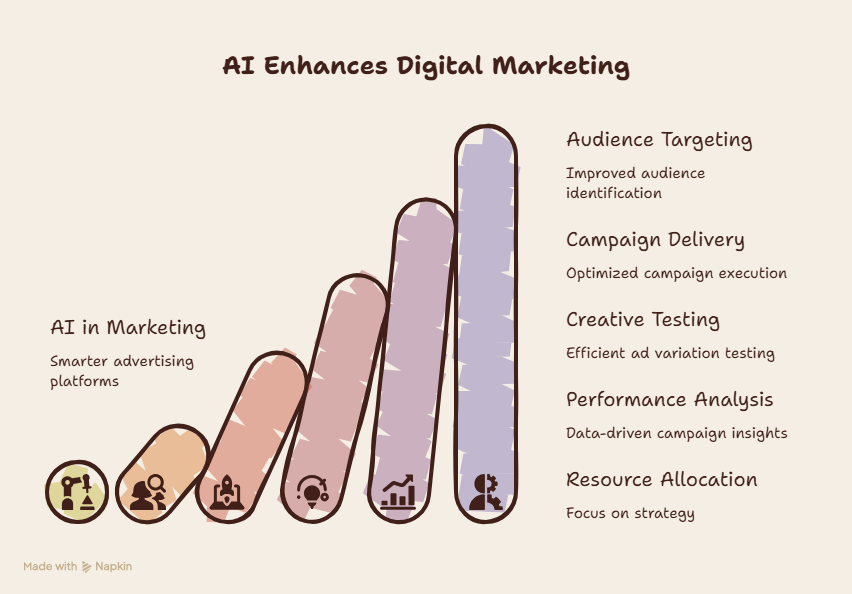
    The right opportunity among digital marketing jobs for freshers can be valuable when it provides learning opportunities instead of only an entry-level title.

    Which Digital Marketing Skill Should a Fresher Learn First?

    There is no single skill that is perfect for everyone.

    If you enjoy writing and research, start with SEO and content marketing.
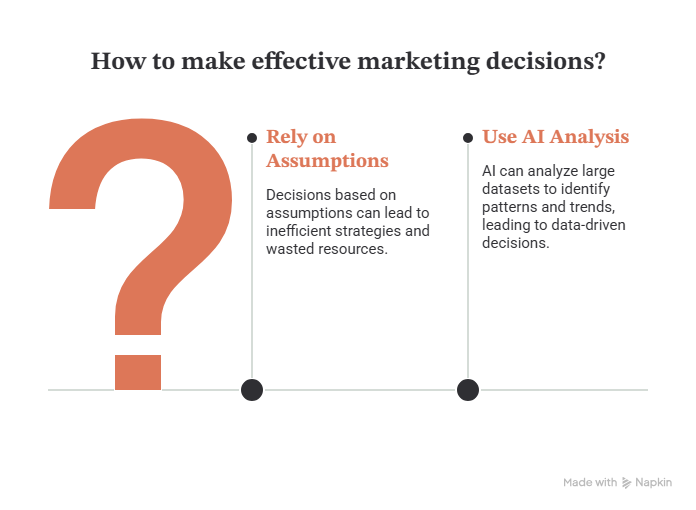
    If you enjoy creativity and communication, explore social media marketing.
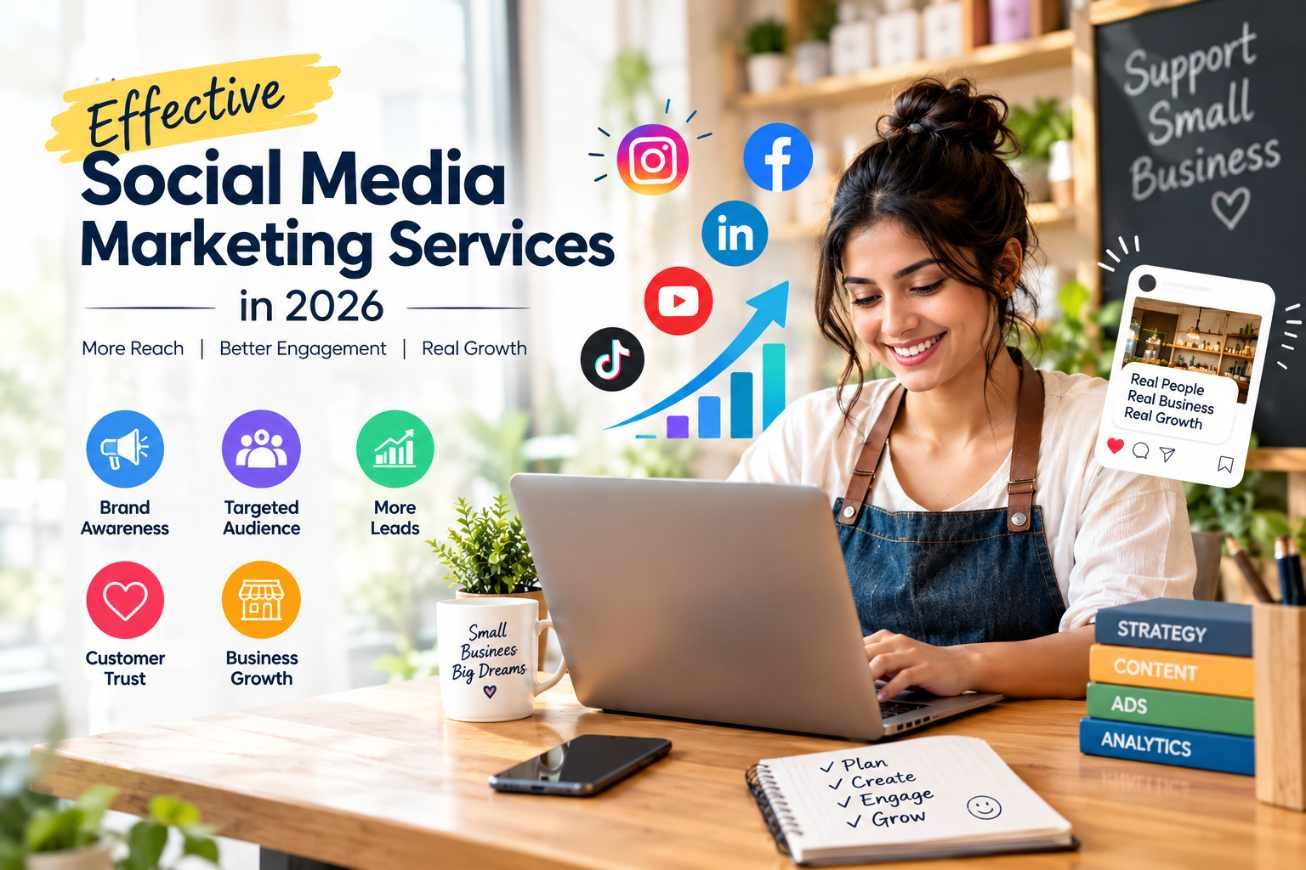
    If you like numbers, testing, and data, consider PPC and analytics.

    If you enjoy strategy and understanding customers, explore broader digital marketing and marketing strategy.

    Do not learn everything at once. Build one strong foundation.

    Is Digital Marketing a Good Career for Freshers?

    Digital marketing jobs for freshers can suit people who enjoy learning and analyzing audiences.

    For a fresher, a major advantage is that practical skills can be demonstrated through projects. You do not always have to wait years to build evidence of what you can do.

    Resources such as Dizital Mantras can also help beginners explore digital marketing concepts and understand which skills may fit their career goals.

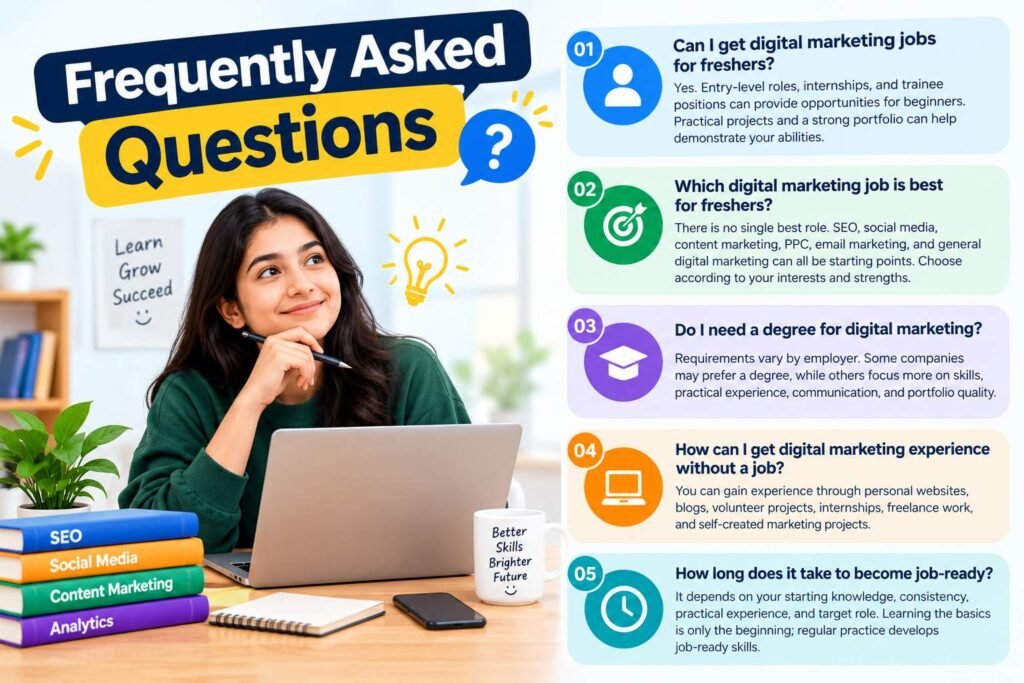
    Frequently Asked Questions

    Can I get digital marketing jobs for freshers?

    Yes. Entry-level roles, internships, and trainee positions can provide opportunities for beginners. Practical projects and a strong portfolio can help demonstrate your abilities.

    Which digital marketing job is best for freshers?

    There is no single best role. SEO, social media, content marketing, PPC, email marketing, and general digital marketing can all be starting points. Choose according to your interests and strengths.

    Do I need a degree for digital marketing?

    Requirements vary by employer. Some companies may prefer a degree, while others focus more on skills, practical experience, communication, and portfolio quality.

    How can I get digital marketing experience without a job?

    You can gain experience through personal websites, blogs, volunteer projects, internships, freelance work, and self-created marketing projects.

    How long does it take to become job-ready?

    It depends on your starting knowledge, consistency, practical experience, and target role. Learning the basics is only the beginning; regular practice develops job-ready skills.

    Frequently Asked Questions about digital marketing jobs for freshers, covering job opportunities, best roles, degree requirements, gaining experience without a job, and becoming job-ready.

    Conclusion

    For beginners exploring digital marketing jobs for freshers, starting a digital marketing career does not require you to know everything from day one. Focus on a strong foundation, choose a suitable specialization, practice your skills, and build evidence of your work.

    The best entry-level roles can provide valuable experience in SEO, social media, content marketing, paid advertising, email marketing, and analytics.

    If you are searching for digital marketing jobs for freshers, build practical skills instead of trying to learn every tool at once. Choose one direction, create projects, build a portfolio, and keep improving.

    Dizital Mantras can also be a useful learning resource for beginners who want to understand digital marketing concepts, explore career paths, and develop practical knowledge for their first opportunity.

    With consistent learning and hands-on practice, your first role can become the starting point for a broader and rewarding digital marketing career.

  • Digital Skill India: Top Digital Skills to Learn for a Successful Career in 2026

    Digital Skill India: Top Digital Skills to Learn for a Successful Career in 2026

    The digital world is changing the way people study, work, communicate, and build careers. In 2026, technology is no longer limited to the IT industry. Businesses in almost every sector are using digital tools to reach customers, manage information, promote their services, and improve productivity.

    Because of this change, Digital Skill India has become an important area of learning for students, job seekers, freelancers, and working professionals. A formal degree can open doors, but practical digital knowledge can help people perform better in today’s technology-driven workplace.

    From artificial intelligence and SEO to digital marketing, data analytics, websites, and social media, there are many skills that can help beginners prepare for future career opportunities.

    “Digital skills driving career success through practical knowledge, better job performance, and future career opportunities.”

    What Is Digital Skill India?

    Digital Skill India refers to the growing importance of developing practical digital abilities among people in India.

    Digital skills are not limited to knowing how to operate a computer or smartphone. They include the ability to use online platforms, understand digital information, work with modern software, communicate through digital channels, and solve problems with technology.

    The Skill India Digital Hub also provides access to areas such as courses, certifications, apprenticeships, jobs, and skill development opportunities. Its learning ecosystem includes emerging areas such as artificial intelligence, machine learning, and automation.

    For learners, Digital Skill India can therefore be viewed as part of the larger shift toward continuous learning and digital career development.

    Why Digital Skills Matter in 2026

    Technology has changed the way companies work. A small business can now promote its products through social media, sell through a website, communicate with customers online, and use analytics to understand its audience.

    This creates new opportunities, but it can also make things confusing for beginners.

    Many learners want to develop digital skills but do not know where to start. They may jump between different courses or try to learn several tools at the same time without building a strong foundation.

    Common Problems Beginners Face

    • Choosing too many skills at the same time
    • Following courses without a clear career objective
    • Depending only on certificates
    • Getting confused by rapidly changing technology
    • Having difficulty showing practical skills to employers

    The solution is to start with one useful skill, practice it regularly, and connect learning with real projects. This practical approach is an important part of Digital Skill India.

    “Digital skills learning journey from choosing one skill to building practical knowledge, improving performance, and creating better career opportunities.”

    Top Digital Skills to Learn in 2026

    Different careers require different abilities. However, some digital skills are becoming useful across multiple industries.

    1. Artificial Intelligence and AI Tools

    Artificial intelligence is influencing many areas of modern work. AI tools can help professionals research topics, organize information, generate ideas, analyze data, and automate repetitive tasks.

    A beginner does not necessarily need advanced programming knowledge to start understanding AI.

    Some useful areas to explore include:

    • Generative AI
    • Basic AI concepts
    • Prompt writing
    • AI-assisted research
    • AI productivity tools
    • Responsible AI usage

    AI literacy is becoming an important part of Digital Skill India because professionals in many fields are likely to interact with AI-powered tools.

    The important point is to learn how to use AI as a support tool rather than depending on it for every task.

    2. Digital Marketing

    Businesses need an online presence to attract and communicate with customers. This makes digital marketing a useful career skill for people interested in business, communication, and online growth.

    Beginners can explore areas such as:

    • SEO
    • Social media marketing
    • Content marketing
    • Google Ads
    • Meta Ads
    • Email marketing
    • Website analytics

    Digital marketing can lead to opportunities in agencies, companies, startups, freelancing, and personal projects.

    For someone starting a career in the digital field, it can be one of the practical directions to explore through Digital Skill India.

    3. Search Engine Optimization

    Search Engine Optimization, commonly called SEO, helps websites improve their visibility in search results.

    Businesses use SEO to attract people who are already searching for their products, services, or information.

    Important SEO skills include:

    • Keyword research
    • On-page optimization
    • Technical SEO
    • Local SEO
    • Off-page SEO
    • Content optimization
    • Search performance analysis

    SEO can be a good choice for learners who enjoy research, writing, websites, and problem-solving.

    It can also be combined with content writing and digital marketing to create a broader skill set.

    4. Data Analytics

    Businesses collect information from websites, social media, advertising campaigns, sales, and customer interactions. Data analytics helps convert this information into meaningful insights.

    Beginners can start with simple tools before moving toward advanced technologies.

    Useful starting areas include:

    • Excel
    • Google Sheets
    • Basic statistics
    • Data visualization
    • Google Analytics
    • Business reporting

    Later, learners can explore SQL, Python, Power BI, or other analytics tools.

    The ability to understand data can make professionals more useful to businesses because decisions can be supported by information rather than guesswork.

    5. Social Media Marketing

    Social media has become an important communication channel for businesses. Platforms such as Instagram, Facebook, LinkedIn, and YouTube allow brands to connect with audiences directly.

    A social media professional may be responsible for:

    • Creating content plans
    • Managing content calendars
    • Researching audiences
    • Planning short videos
    • Engaging with followers
    • Measuring performance

    For creative learners, social media marketing can be an accessible starting point within Digital Skill India.

    It also gives beginners a chance to create sample campaigns and build a portfolio without waiting for their first job.

    6. Web Development and Website Skills

    Websites remain an important part of the digital presence of businesses, organizations, and professionals.

    A beginner does not have to become an expert developer immediately. Understanding the fundamentals can be enough to start.

    Useful areas include:

    • HTML
    • CSS
    • JavaScript
    • WordPress
    • Website optimization
    • Basic UX concepts

    Website knowledge can also benefit SEO professionals, digital marketers, content creators, and entrepreneurs.

    This makes web-related knowledge another useful direction for people exploring Digital Skill India.

    7. Content Creation

    Every online business needs content. This can include blog articles, videos, graphics, social media posts, emails, and other forms of communication.

    Useful content skills include:

    • Copywriting
    • Blog writing
    • Video creation
    • Canva
    • Storytelling
    • Content planning
    • Basic editing

    AI can make some content tasks faster, but it does not remove the need for human judgment. Original ideas, accuracy, creativity, and understanding the audience are still important.

    How to Choose the Right Digital Skill

    A common mistake among beginners is trying to learn everything at once.

    A better strategy is to choose a skill according to your interests and career goals. The purpose of Digital Skill India should not be to learn every available technology. It should be to develop skills that are actually useful for your chosen path.

    If You Enjoy Writing

    Consider SEO, blogging, copywriting, and content marketing.

    If You Enjoy Creativity

    Explore graphic design, video editing, Canva, and social media.

    If You Like Numbers

    Data analytics, reporting, and performance marketing may be suitable.

    If You Like Technology

    Consider web development, programming, AI, or automation.

    If You Like Business and Communication

    Digital marketing, sales, social media, and customer communication can be useful choices.

    Choosing one direction initially can make learning less overwhelming.

    How to Choose the Right Digital Skill — premium infographic showing a person choosing a digital career path based on interests in writing, creativity, numbers, technology, and business communication.”

    The Problem With Learning Only From Certificates

    Completing a course can demonstrate that you have studied a subject, but a certificate alone does not always show what you can actually do.

    Practical work makes a much stronger demonstration of ability.

    For example, someone learning SEO can create a small website, conduct keyword research, optimize pages, and track performance.

    Similarly, someone learning social media marketing can prepare a sample content calendar and explain how they would improve a brand’s online presence.

    This type of practical work makes the learning journey behind Digital Skill India more meaningful.

    A Practical Learning Approach

    Instead of collecting multiple certificates, beginners can follow a simple process:

    1. Select one skill.
    2. Understand the fundamentals.
    3. Practice regularly.
    4. Work on small projects.
    5. Create a portfolio.
    6. Share useful work online.
    7. Apply for internships, jobs, freelance projects, or apprenticeships.

    This method allows learners to gradually move from theory to practical experience.

    It also makes it easier to identify areas that need improvement.

    Role of Digital Skill India in Career Development

    The importance of Digital Skill India is connected with the growing need for accessible digital learning and employable skills.

    The Skill India Digital Hub provides learning and career-related resources, including courses, certifications, apprenticeships, job opportunities, and skill development options.

    As technology continues to influence different industries, the ability to learn new tools and adapt to changing requirements will become increasingly valuable.

    Digital learning is therefore not something that should stop after completing one course. It should become an ongoing part of career development.

    How Students Can Start in 2026

    Students do not need to wait until they complete college before developing digital skills.

    They can begin with a simple plan:

    • Learn essential computer and internet skills.
    • Choose one career-focused digital skill.
    • Practice regularly.
    • Complete small projects.
    • Build a portfolio.
    • Improve communication skills.
    • Understand how AI can support their chosen field.
    • Explore internships and entry-level opportunities.

    This step-by-step approach can help students make better use of the opportunities associated with Digital Skill India.

    The goal should be steady improvement rather than trying to become an expert within a few weeks.

    Future of Digital Skills in India

    The workplace will continue to evolve as AI, automation, data, and digital platforms become more common.

    Some existing roles may change, while new responsibilities and job opportunities may appear. Professionals will increasingly need to understand how technology can be used alongside human skills.

    This makes adaptability extremely important.

    A successful professional in the future will not necessarily be the person who knows every tool. It may be the person who can learn quickly, solve problems, communicate clearly, and apply technology effectively.

    This is where Digital Skill India becomes important for India’s future workforce.

    Future of Digital Skills in India — premium infographic showing a professional working on a laptop with an AI-powered map of India and key areas including AI and automation, data and analytics, digital platforms, and new job opportunities.

    Conclusion

    Digital skills are becoming an important part of career preparation in 2026. Students and professionals can choose from many areas, including AI, SEO, digital marketing, data analytics, social media, web development, and content creation.

    The best approach is not to learn everything simultaneously. Start with one area, practice it through real projects, and gradually add new skills as your confidence increases.

    Digital Skill India reflects the growing importance of digital learning and career readiness in a technology-driven economy. Even a small beginning, such as learning one skill and completing one practical project, can become the foundation for a larger career journey.

    For learners exploring digital marketing, Dizital Mantras can also be a useful source of practical learning ideas and industry-related knowledge. The focus should remain on understanding concepts, gaining experience, and continuously improving rather than simply collecting certificates.

    In 2026, digital skills can help people become more adaptable, confident, and prepared for changing career opportunities. The most valuable step is to start learning, keep practicing, and stay open to new technology.

  • AI in Digital Marketing: How It Is Changing Digital Marketing in 2026

    AI in Digital Marketing: How It Is Changing Digital Marketing in 2026

    Digital marketing is entering a new phase in 2026, and artificial intelligence is playing a major role in this transformation. AI is no longer limited to generating text or creating images. Businesses are now using it for search, advertising, customer support, data analysis, personalization, and marketing automation.

    The growth of AI in Digital Marketing is changing the way marketers understand their audiences and make business decisions. Tasks that once required hours of manual work can now be completed much faster with the help of intelligent tools.

    AI can analyze customer behavior, identify patterns, suggest ideas, and help marketers make more informed decisions.

    Search is also becoming more AI-driven. People are increasingly using conversational questions instead of short keyword-based searches. This means businesses need to think beyond traditional SEO and create content that genuinely answers what users want to know.

    For this reason, understanding AI in Digital Marketing has become an important skill for modern marketers.

    AI in Digital Marketing mind map showing marketing automation, search, advertising, personalization, data analysis, and customer support

    What Is AI in Digital Marketing?

    AI in Digital Marketing refers to the use of artificial intelligence to improve different marketing activities and make them more efficient.

    Instead of performing every task manually, marketers can use AI tools to process information, identify patterns, automate repetitive activities, and generate useful suggestions.

    AI can support marketers with tasks such as:

    • Finding content ideas
    • Understanding audience interests
    • Analyzing website performance
    • Creating different ad variations
    • Personalizing marketing messages
    • Studying customer behavior
    • Automating routine tasks
    • Identifying campaign opportunities

    However, AI is not simply about replacing people.

    The real advantage of AI in Digital Marketing comes from combining machine intelligence with human creativity, experience, and decision-making.

    Why AI in Digital Marketing Is Growing in 2026

    The amount of digital information produced by customers is growing every day.

    People search for products, watch videos, visit websites, interact with social media content, read reviews, and click advertisements. Manually studying all these activities can be difficult for a marketing team.

    AI can process large amounts of information quickly and highlight patterns that may otherwise be difficult to notice.

    Another major change is the way people search for information.

    Instead of typing a few words into a search engine, users are increasingly asking complete and conversational questions. AI-powered search experiences are designed to understand the context behind these questions.

    This development is creating new opportunities for businesses that focus on useful, well-structured, and trustworthy content.

    How AI Is Changing SEO

    SEO is one of the areas where AI in Digital Marketing is having a noticeable impact.

    Earlier, SEO strategies often focused heavily on keywords, backlinks, technical optimization, and individual search rankings. These factors remain relevant, but search engines are becoming better at understanding meaning, context, and user intent.

    This means marketers should focus on answering the user’s actual question instead of simply repeating a keyword.

    Important SEO changes include:

    • More conversational searches
    • Greater focus on search intent
    • AI-generated search experiences
    • Increased importance of useful content
    • Stronger focus on topical expertise
    • Greater importance of trustworthy information
    • Optimization for AI-assisted search

    For example, instead of creating several pages targeting slightly different versions of the same keyword, businesses can create one detailed resource that genuinely solves the user’s problem.

    This makes content more useful for both readers and modern search systems.

    AI and Content Creation

    Content marketing is another area strongly influenced by AI in Digital Marketing.

    Creating blogs, social media posts, email campaigns, advertisements, and video scripts can require significant time. AI can make the initial stages of this process faster.

    Marketers can use AI to develop:

    • Blog ideas and outlines
    • Social media captions
    • Email drafts
    • Video concepts
    • Advertisement copy
    • Product descriptions
    • Content calendars
    • Creative ideas

    But there is an important difference between AI-assisted content and completely automated content.

    Publishing everything generated by an AI tool without checking it can lead to inaccurate information, repetitive writing, and a lack of originality.

    A better formula is:

    AI Assistance + Human Experience + Original Ideas = Stronger Content

    AI can help with speed and brainstorming, while humans should remain responsible for accuracy, brand voice, creativity, and final decisions.

    AI-Powered Advertising

    Advertising is becoming smarter because of AI in Digital Marketing.
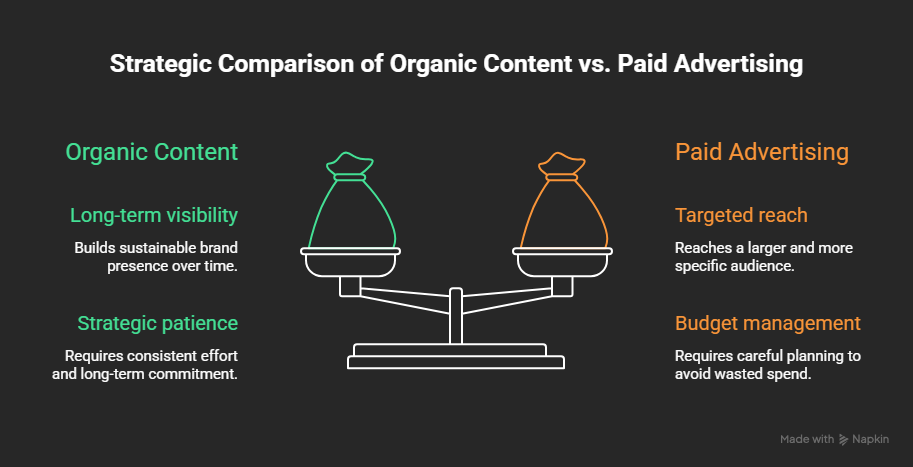
    Modern advertising platforms can analyze different signals and use them to improve audience targeting, campaign delivery, creative testing, and performance.

    AI can help advertisers:

    • Discover potential audiences
    • Create different ad variations
    • Improve advertising messages
    • Find new opportunities
    • Analyze campaign performance
    • Test different creative approaches

    This can be particularly useful for small businesses with limited marketing resources.

    Instead of spending most of their time on repetitive campaign tasks, marketers can allow AI to handle parts of the process and concentrate more on strategy, customer understanding, and conversion goals.

    AI in Digital Marketing improving audience targeting, campaign delivery, creative testing, performance analysis, and resource allocation

    AI and Social Media Marketing

    Social media requires businesses to create fresh and relevant content regularly. Managing multiple platforms can become time-consuming.
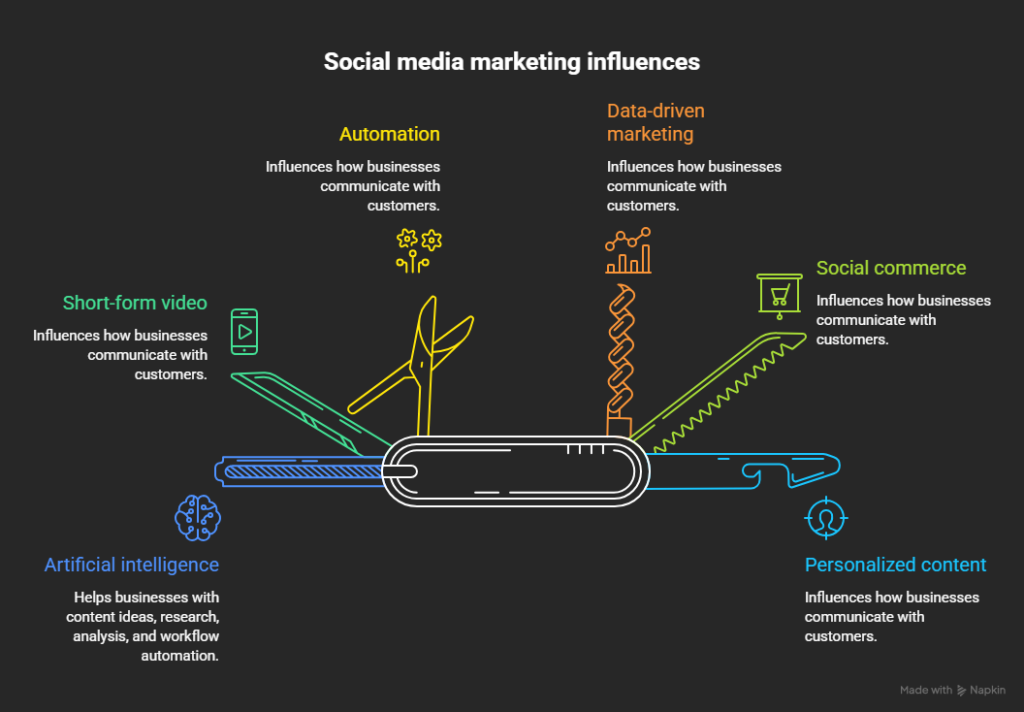
    AI in Digital Marketing can make several parts of social media management easier.

    For example, AI can help marketers identify:

    • Popular content topics
    • Audience interests
    • Content performance patterns
    • Potential post ideas
    • Different content variations
    • Engagement trends

    AI can also assist with captions, content planning, creative brainstorming, and audience analysis.

    However, social media should not become completely automated.

    People still value genuine stories, personal opinions, humor, experiences, and emotional connections. Therefore, AI should support the creative process instead of making every post sound the same.

    AI and Personalization

    Customers increasingly expect brands to provide experiences that are relevant to their interests.

    Sending the same message to every customer may not always produce the best results. This is where AI in Digital Marketing can be useful.

    AI can study customer interactions and help businesses create more relevant experiences.

    Examples include:

    • Personalized product recommendations
    • Relevant email messages
    • Customized website experiences
    • Audience-specific advertisements
    • Personalized offers
    • Automated responses

    When customers receive information that matches their interests, the overall marketing experience can become more useful and engaging.
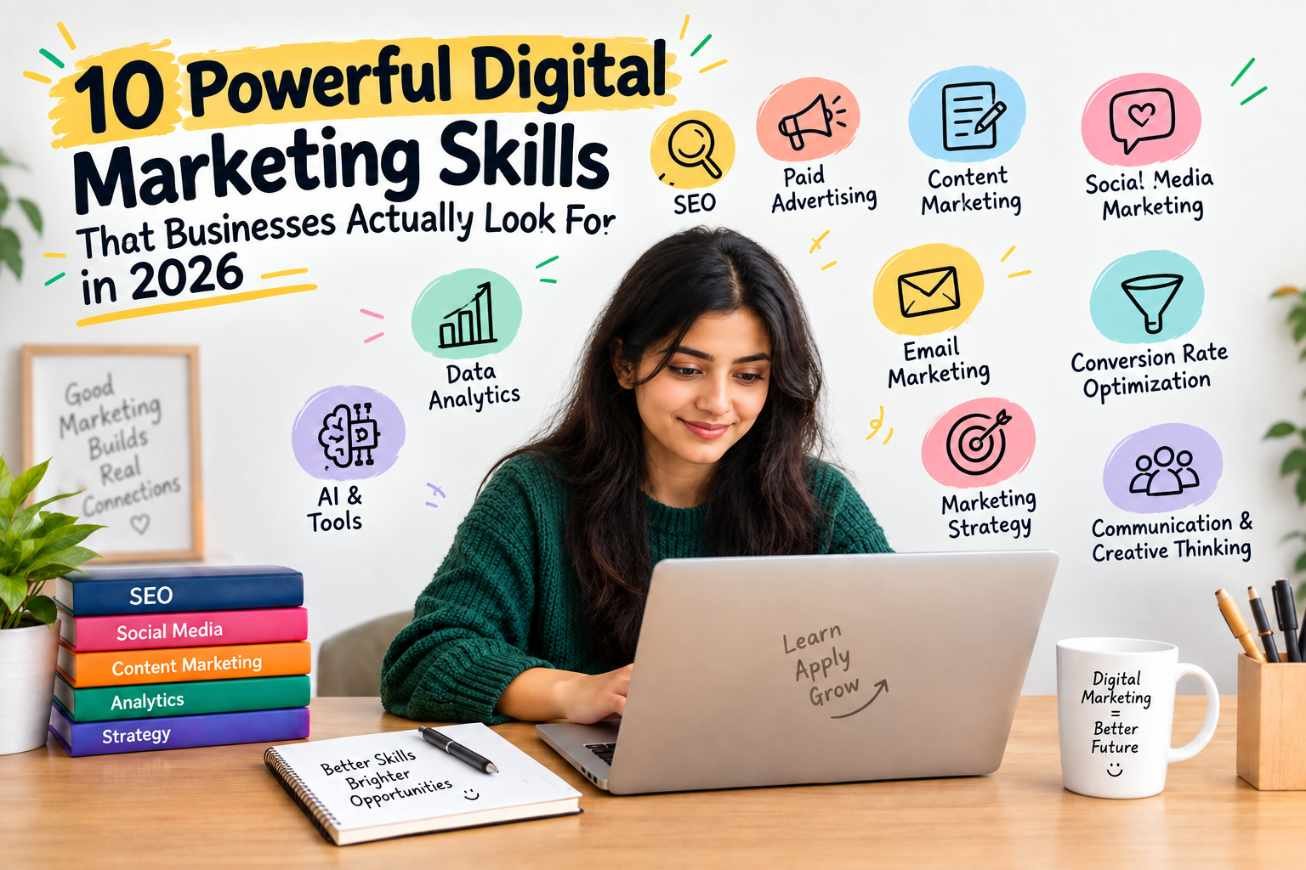
    AI Chatbots and Customer Support

    Customer communication is also changing with AI in Digital Marketing.
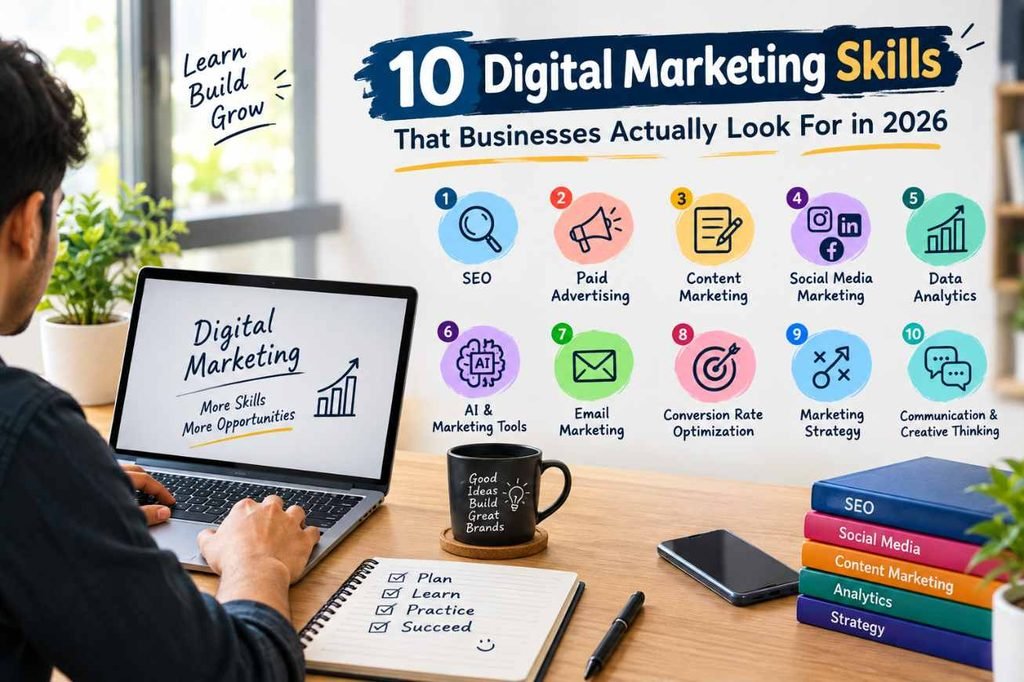
    AI-powered chatbots can handle many common questions without requiring a human employee to respond to every basic query.
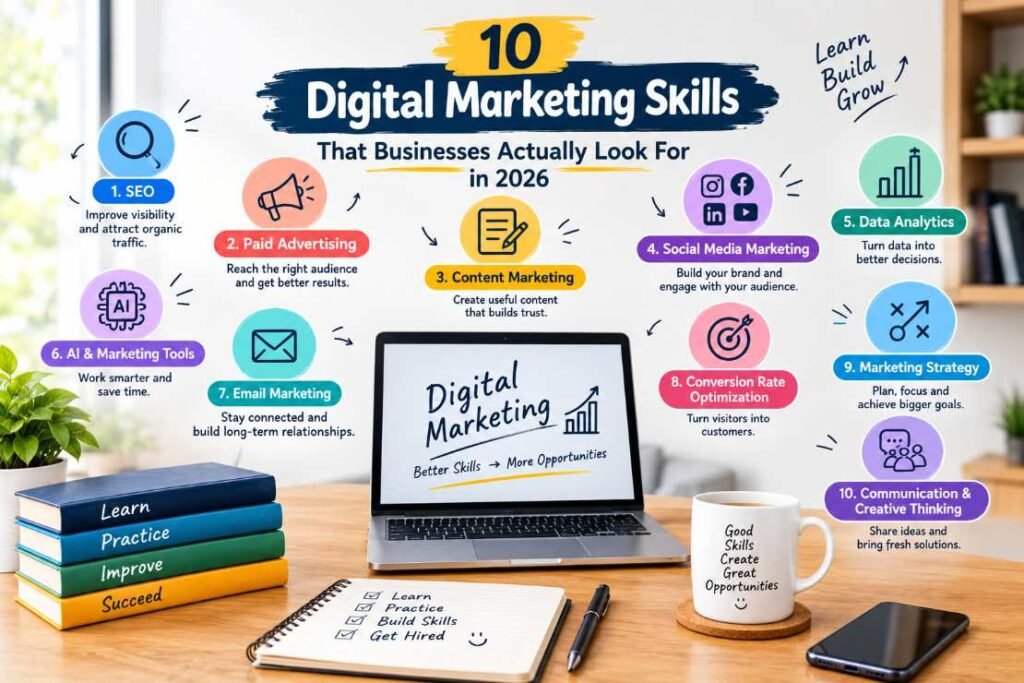
    They can assist with information related to:

    • Products
    • Services
    • Pricing
    • Availability
    • Basic support
    • Frequently asked questions

    This can help businesses provide faster responses, especially outside normal working hours.

    However, human support is still important for complicated issues, sensitive situations, and customers who require personalized assistance.

    The best approach is to use AI for routine conversations while allowing humans to handle situations that require judgment and empathy.

    AI and Marketing Analytics

    Marketing decisions should be based on more than assumptions.

    Businesses collect information from websites, advertising platforms, social media, email campaigns, and customer interactions. The challenge is turning this information into useful decisions.

    AI in Digital Marketing can help marketers analyze large amounts of data and identify patterns more efficiently.

    AI-powered analysis can help answer questions such as:

    • Which campaign is performing best?
    • Which audience is generating conversions?
    • Which pages have poor engagement?
    • What type of content attracts visitors?
    • Where is the advertising budget being wasted?
    • Which customer behaviors are changing?

    Instead of looking at hundreds of numbers manually, marketers can use AI to identify important trends and then decide what action should be taken.

    AI in Digital Marketing analytics showing how AI analysis supports data-driven marketing decisions and reduces reliance on assumptions

    Problems of Using AI in Digital Marketing

    Although AI in Digital Marketing offers many advantages, businesses also need to understand its limitations.

    1. Generic Content

    If businesses depend completely on AI, their content may start sounding similar to thousands of other websites.

    Solution: Add personal experiences, original examples, research, opinions, and real-world insights.

    2. Incorrect Information

    AI tools can sometimes provide information that is incomplete, outdated, or incorrect.

    Solution: Check important facts and sources before publishing content.

    3. Reduced Creativity

    Using AI for every creative decision can make marketing less personal.

    Solution: Use AI for ideas and assistance, but keep human creativity involved in the final content.

    4. Privacy Issues

    AI systems can use large amounts of data, which makes responsible data handling important.

    Solution: Businesses should be transparent about data collection and follow relevant privacy requirements.

    5. Too Much Automation

    Automation saves time, but not every decision should be left to software.

    Solution: Keep human oversight for strategy, quality control, brand decisions, and important customer interactions.

    How Businesses Can Use AI Effectively

    Businesses do not need to start using dozens of AI tools at once.

    A more practical approach is to identify specific problems and then use AI where it can provide genuine value.

    A simple process is:

    1. Find repetitive marketing tasks.
    2. Select an appropriate AI tool.
    3. Start with a small experiment.
    4. Review the AI-generated output.
    5. Measure the results.
    6. Improve the workflow.
    7. Keep human supervision where necessary.

    The purpose of AI in Digital Marketing should not be to use AI everywhere.

    The purpose should be to use it where it saves time, improves decisions, or creates a better experience for customers.

    The Future of AI in Digital Marketing

    The future of AI in Digital Marketing is likely to move toward more connected and intelligent marketing systems.

    AI agents are becoming increasingly capable of performing multiple steps instead of simply responding to a single instruction.

    In the future, marketing systems may be able to:

    • Study customer behavior
    • Suggest campaign ideas
    • Generate marketing assets
    • Monitor campaign performance
    • Detect new opportunities
    • Recommend improvements
    • Assist customers
    • Automate parts of the buying journey

    However, this does not mean that marketers will become unnecessary.

    Instead, marketing professionals may spend less time on repetitive tasks and more time on strategy, creativity, customer psychology, brand building, and business growth.

    This makes learning both digital marketing fundamentals and AI tools increasingly valuable.

    Conclusion

    AI in Digital Marketing is changing the way businesses approach content, SEO, advertising, customer service, personalization, and analytics.

    In 2026, AI is becoming a practical part of everyday marketing rather than simply being a futuristic technology. Businesses can use it to save time, understand customers, improve campaigns, and discover new opportunities.

    But successful marketing is not about allowing AI to make every decision.

    The strongest approach is to combine AI with human creativity, experience, research, strategic thinking, and responsible decision-making.

    For people learning digital marketing, understanding AI in Digital Marketing can help build skills that remain relevant as the industry continues to change. Learning through practical resources and environments such as Dizital Mantras can also be one part of exploring how modern marketing is evolving.

    The future of digital marketing will not belong simply to those who use AI. It will belong to those who understand when to use AI, how to use it, and where human thinking matters most..

  • How Social Media Marketing Services Help Small Businesses Grow in 2026

    How Social Media Marketing Services Help Small Businesses Grow in 2026

    How Social Media Marketing Services Help Small Businesses Grow in 2026How Social Media Marketing Helps Small Businesses Grow in 2026

    In 2026, social media is no longer only a platform for sharing photos, videos, and personal updates. It has become an important part of how businesses attract customers, build trust, generate leads, and grow online.

    For small businesses, competing with large brands can be difficult. Bigger companies often have larger advertising budgets and dedicated marketing teams. Small businesses, however, can compete by understanding their audience, creating useful content, and maintaining a consistent online presence.

    This is where social media marketing services can help. A well-planned strategy allows businesses to reach relevant audiences, create engaging content, manage campaigns, and measure marketing performance.

    Social media marketing services helping small businesses grow through better reach, customer engagement, leads, and brand awareness.

    Why Social Media Matters for Small Businesses in 2026

    Customers increasingly use social media to discover businesses, products, services, reviews, and recommendations. Before contacting a company, many people check its online presence to understand what it offers and how it interacts with customers.

    Platforms such as Instagram, Facebook, YouTube, and LinkedIn give small businesses opportunities to communicate directly with potential customers.

    With the right strategy, businesses can use social media to:

    • Increase brand awareness
    • Reach a targeted audience
    • Share useful information
    • Generate potential leads
    • Promote products and services
    • Build customer relationships
    • Drive website traffic
    • Understand customer interests
    • Improve online visibility

    The goal should not simply be to gain followers. Businesses should use social media to support specific marketing and business objectives.

    Well-planned social media marketing services can make this process more organized and consistent.

    Problems Small Businesses Face on Social Media

    Having a social media account does not automatically guarantee business growth. Many small businesses face challenges that prevent them from getting meaningful results.

    1. Inconsistent Content

    Some businesses post regularly for a few days and then stop for weeks. This makes it difficult to maintain audience interest.

    A content calendar can help businesses plan posts, videos, stories, and campaigns in advance.

    2. Reaching the Wrong Audience

    A business may receive many likes and views but very few enquiries or sales. This can happen when content reaches people who are not interested in the product or service.

    Effective social media marketing services focus on understanding the ideal customer before developing campaigns.

    3. Lack of a Clear Strategy

    Posting random content without a specific purpose can waste time and resources.

    Every post should have a reason. It may be designed to educate, create awareness, increase engagement, build trust, or generate leads.

    4. Low Customer Engagement

    Social media is a two-way communication channel.

    Customers may comment on posts, ask questions, send direct messages, or share feedback. Businesses need to respond professionally and consistently.

    5. Measuring the Wrong Metrics

    Many businesses focus only on follower numbers.

    However, followers are not the only indicator of success. Reach, engagement, website visits, enquiries, leads, and conversions can provide more useful information.

    “Premium infographic showing five common social media challenges faced by small businesses: inconsistent content, reaching the wrong audience, lack of a clear strategy, low customer engagement, and measuring the wrong metrics, with colorful icons and a modern smartphone social media illustration.”

    How Social Media Marketing Services Help Small Businesses

    Professional social media marketing services can help businesses address these challenges through planning, content creation, audience research, campaign management, and performance analysis.

    The objective is not simply to publish more posts. The objective is to create content that contributes to measurable business goals.

    1. Building a Consistent Brand Presence

    Consistency helps people recognize a business.

    Businesses can create a stronger identity by maintaining consistent visual elements, messaging, tone, and content themes across their social profiles.

    A consistent presence can make a small business appear more professional and trustworthy.

    Businesses can improve consistency through:

    • A monthly content calendar
    • Regular posting schedules
    • Consistent branding
    • Clear messaging
    • Planned campaigns
    • Educational content

    This is one of the areas where social media marketing services can save businesses time and provide a more structured approach.

    2. Reaching the Right Audience

    One of the biggest advantages of social media is the ability to reach specific audiences.

    Businesses can create content around customer interests, location, needs, behaviour, and preferences.

    For example, a local bakery could create content around birthday cakes, wedding cakes, celebrations, food ideas, and local events.

    Instead of trying to reach everyone, social media marketing services can help businesses focus their communication on audiences who are more likely to be interested in their products or services.

    3. Building Customer Trust

    Trust is an important factor in online purchasing decisions.

    People often want to know whether a business is reliable before spending money. Social media gives businesses an opportunity to demonstrate their credibility.

    Useful trust-building content includes:

    • Customer reviews
    • Testimonials
    • Product demonstrations
    • Behind-the-scenes content
    • Frequently asked questions
    • Educational posts
    • Customer experiences

    Businesses should avoid making every post a direct sales message. Helpful and informative content can create stronger relationships with audiences.

    4. Using Short-Form Video Content

    Short-form video continues to be an important content format in 2026.

    Businesses can use short videos to demonstrate products, answer common questions, explain services, share tips, or show their working process.

    For example, a home décor business could create videos showing room transformations, decoration ideas, material comparisons, and simple design tips.

    The purpose should not simply be to chase viral views. Content should attract relevant viewers and provide something useful.

    Modern social media marketing services can include short-form video as part of a wider content strategy.

    5. Generating Leads

    Social media can help businesses turn attention into potential customers.

    A business can encourage users to:

    • Visit its website
    • Send a direct message
    • Fill out a contact form
    • Request a quotation
    • Make a phone call
    • Book a consultation
    • Ask for more information

    The next step should always be clear to the user.

    Good social media marketing services connect content with suitable calls to action so that interested users know what to do next.

    The Role of Paid Social Media Advertising

    Organic content can help businesses build long-term visibility, while paid advertising can help them reach a larger and more targeted audience.

    Platforms such as Meta provide advertising options that allow businesses to target users according to different characteristics, interests, locations, and behaviours.

    Small businesses can use paid campaigns for:

    • Lead generation
    • Website traffic
    • Product promotion
    • Local awareness
    • Event promotion
    • Retargeting

    However, advertising should not be treated as a shortcut to success.

    Businesses need suitable creatives, a relevant audience, a clear offer, and a simple customer journey.

    Without proper planning, advertising can consume a budget without producing meaningful results. This is why social media marketing services often combine organic content with paid campaigns.

    “Strategic comparison infographic showing organic content versus paid advertising, highlighting long-term visibility and strategic patience for organic content, and targeted reach and budget management for paid advertising.”

    Social Media and Local Business Growth

    Social media can be especially useful for local businesses.

    Restaurants, salons, clinics, hotels, coaching centres, retailers, and service providers can use social platforms to connect with people in their service areas.

    Local businesses can create content such as:

    • Location-based posts
    • Customer reviews
    • Local events
    • New product announcements
    • Special offers
    • Frequently asked questions
    • Behind-the-scenes content

    For example, a local restaurant can share food videos, customer reviews, menu updates, special events, and location information.

    Combining social media with local SEO can create a stronger digital presence. Social media marketing services can support this process by keeping local content consistent and audience-focused.

    How to Create a Better Social Media Strategy in 2026

    A successful strategy begins with clear objectives. Businesses should know what they want to achieve before creating content.

    Step 1: Define Your Goal

    Decide what you want social media to achieve.

    Possible goals include:

    • Brand awareness
    • Engagement
    • Lead generation
    • Website traffic
    • Sales
    • Customer retention

    Step 2: Understand Your Audience

    Learn about your ideal customers.

    Understand their:

    • Needs
    • Problems
    • Interests
    • Location
    • Buying behaviour
    • Common questions
    • Preferred content formats

    This information helps businesses create more relevant content.

    Step 3: Choose the Right Platforms

    Businesses do not need to use every social media platform.

    Choose platforms where the target audience is most active.

    For example, visually focused businesses may benefit from Instagram and YouTube, while professional service businesses may find LinkedIn useful.

    Step 4: Create Valuable Content

    A strong content strategy should provide real value.

    Businesses can create:

    • Educational posts
    • Short videos
    • Tips and guides
    • Product demonstrations
    • Customer stories
    • FAQs
    • Industry updates
    • Behind-the-scenes content

    Content should help the audience instead of constantly asking them to make a purchase.

    Step 5: Track Performance

    Regular measurement is essential.

    Businesses should monitor:

    • Reach
    • Engagement rate
    • Video views
    • Website clicks
    • Leads
    • Conversions
    • Cost per lead

    These insights help businesses understand what works and what needs improvement.

    Using social media marketing services can make performance tracking and campaign optimization more systematic.

    Future of Social Media Marketing for Small Businesses

    The social media landscape will continue to evolve in the coming years.

    Artificial intelligence, personalized content, short-form video, social commerce, automation, and data-driven marketing are likely to influence how businesses communicate with customers.

    AI can help businesses with content ideas, research, analysis, and workflow automation. However, technology should support creativity and customer understanding rather than replace them completely.

    People still value authentic communication, useful information, and genuine experiences.

    For this reason, social media marketing services in 2026 should combine technology with creativity, strategy, and a strong understanding of customers.

    Small businesses that regularly test content, study performance data, and adapt to changing customer behaviour can build stronger digital relationships.

    “Infographic illustrating the future of social media marketing for small businesses, highlighting short-form video, automation, data-driven marketing, social commerce, personalized content, and artificial intelligence.”

    Additional Benefits of Social Media Marketing Services

    Beyond visibility and engagement, businesses can use social media to understand their customers better.

    Comments, messages, reviews, and reactions can reveal what customers like, what questions they have, and which products or services attract attention.

    This information can help businesses improve their wider marketing strategy.

    Social media marketing services can also support businesses by organizing this information and using performance data to improve future campaigns.

    Another benefit is flexibility. Small businesses can test different content formats, topics, and messages without completely changing their marketing approach.

    This makes social media useful for businesses that are still discovering what works best for their audience.

    Common Mistakes to Avoid

    Small businesses should also avoid several common mistakes while building their social media presence.

    • Posting only promotional content
    • Buying fake followers
    • Ignoring customer comments
    • Copying competitors without adding value
    • Using irrelevant hashtags
    • Focusing only on follower numbers
    • Posting without a clear objective
    • Ignoring performance data

    Avoiding these mistakes can improve the quality of a business’s online presence.

    A balanced strategy supported by social media marketing services can help businesses focus on sustainable growth instead of short-term numbers.

    Conclusion

    Social media has become an important growth channel for small businesses in 2026. It gives businesses an opportunity to increase visibility, communicate with customers, generate leads, promote products, and build long-term trust.

    However, successful social media marketing requires more than simply creating posts. Businesses need clear goals, relevant content, audience understanding, consistent communication, and regular performance analysis.

    When used strategically, social media marketing services can help small businesses create a professional online presence and connect marketing activities with real business objectives.

    The most effective approach is not to chase followers or viral content at any cost. Businesses should focus on reaching the right people, solving their problems, providing useful information, and building genuine relationships.

    As digital marketing continues to change, learning these concepts step by step can help businesses and learners understand the online environment better. Learning resources such as Dizital Mantras can also help learners explore changing digital marketing concepts and develop practical knowledge over time.

  • 10 Powerful Digital Marketing Skills That Businesses Actually Look For in 2026

    10 Powerful Digital Marketing Skills That Businesses Actually Look For in 2026

    Digital marketing has become an important part of modern business growth. From small local businesses to large companies, brands use digital channels to reach customers, generate leads, increase sales, and build long-term relationships. As the digital industry continues to change, businesses are also looking for professionals who can do more than simply create social media posts.

    In 2026, companies need people who understand marketing strategy, technology, data, customer behavior, and content. This makes Digital Marketing Skills increasingly valuable for students, beginners, freelancers, and professionals who want to build a career in the digital industry.

    The good news is that you do not need to master every digital marketing skill at once. You can start with the fundamentals, practice one skill at a time, and gradually develop a broader skill set.

    In this article, we will explore 10 Digital Marketing Skills that businesses can use across different marketing activities in 2026.

    10 digital marketing skills businesses look for in 2026, including SEO, paid advertising, content marketing, social media, analytics, AI tools, email marketing, and marketing strategy.

    1. Search Engine Optimization (SEO)

    Search Engine Optimization, commonly known as SEO, remains an important skill for businesses that want to improve their visibility on search engines.

    SEO helps websites attract relevant organic traffic by improving their content, structure, and overall search visibility.

    Important areas of SEO include:

    • Keyword research
    • On-page SEO
    • Technical SEO
    • Off-page SEO
    • Local SEO
    • Internal linking
    • Content optimization
    • Search intent

    A good SEO professional does not simply place keywords inside an article. They need to understand what users are searching for and create useful content that matches their search intent.

    For example, if someone searches for “digital marketing course after 12th,” the content should provide a clear and useful answer rather than simply repeating the keyword.

    Learning SEO is one of the most useful Digital Marketing Skills for beginners because it combines research, content, technical understanding, and analysis.

    2. Paid Advertising

    Organic marketing can take time, so many businesses also use paid advertising to reach their target audience faster.

    Platforms such as Google Ads and Meta Ads allow businesses to target specific audiences based on factors such as search behavior, interests, demographics, and online activity.

    Important paid advertising skills include:

    • Campaign setup
    • Audience targeting
    • Keyword selection
    • Ad copywriting
    • Budget management
    • Conversion tracking
    • A/B testing
    • Campaign optimization

    A marketer should not judge an advertising campaign only by the number of clicks. They also need to understand conversions, cost per lead, customer acquisition cost, and return on advertising spend.

    Paid advertising is therefore one of the practical Digital Marketing Skills that can directly connect marketing activity with business results.

    3. Content Marketing

    Content marketing focuses on creating useful and relevant information for a specific audience.

    Businesses use different types of content, including:

    • Blog posts
    • Social media posts
    • Videos
    • Infographics
    • Guides
    • Case studies
    • Email content
    • Short-form videos

    Good content should solve a problem, answer a question, educate the audience, or help them make a decision.

    For example, a digital marketing institute can create beginner-friendly content explaining SEO, Google Ads, social media marketing, and career opportunities.

    Content marketing requires research, writing, creativity, audience understanding, and consistency. These are valuable Digital Marketing Skills because almost every online business needs content in some form.

    4. Social Media Marketing

    Social media has become an important communication channel for businesses. Platforms such as Instagram, Facebook, LinkedIn, and YouTube allow brands to interact with audiences and build communities.

    Social media marketing involves much more than uploading posts.

    A marketer may need to handle:

    • Content calendars
    • Reels and short videos
    • Community management
    • Audience engagement
    • Social media analytics
    • Hashtag research
    • Brand communication
    • Platform-specific content

    Different platforms also require different approaches. A strategy that works on Instagram may not produce the same results on LinkedIn.

    Understanding audience behavior and creating platform-specific content are important Digital Marketing Skills for anyone interested in social media marketing.

    10 digital marketing skills businesses look for in 2026, including SEO, paid advertising, content marketing, social media marketing, data analytics, AI tools, email marketing, CRO, marketing strategy, and communication.

    5. Data Analytics

    Modern marketing produces a large amount of data. Businesses want marketers who can understand that data and use it to improve decisions.

    Analytics can help marketers understand:

    • Where website visitors come from
    • Which pages receive traffic
    • How users interact with a website
    • Which campaigns generate conversions
    • How audiences behave
    • Which marketing channels perform better

    Tools such as Google Analytics and advertising platform dashboards can provide useful performance information.

    However, knowing how to open an analytics dashboard is not enough. A marketer should be able to interpret the numbers and explain what they mean for the business.

    Data analysis is therefore one of the Digital Marketing Skills that can help marketers move from simply executing campaigns to making informed marketing decisions.

    6. AI and Marketing Tools

    Artificial intelligence is changing how marketers perform many everyday tasks.

    AI tools can assist with:

    • Content ideas
    • Research
    • Drafting
    • Data analysis
    • Customer communication
    • Campaign brainstorming
    • Workflow automation
    • Content variations

    However, AI should be treated as a tool rather than a complete replacement for marketing knowledge.

    Marketers still need to check facts, understand the audience, maintain brand voice, and review the quality of AI-generated content.

    Learning how to combine AI with traditional marketing knowledge can make a professional more efficient.

    For this reason, AI literacy is becoming one of the important Digital Marketing Skills to develop in 2026.

    AI in marketing as a tool, highlighting fact-checking, audience understanding, brand voice, and content quality with human review.

    7. Email Marketing

    Email marketing allows businesses to communicate directly with subscribers and existing customers.

    It can be used for:

    • Newsletters
    • Product announcements
    • Promotional campaigns
    • Lead nurturing
    • Customer updates
    • Automated sequences
    • Special offers

    Successful email marketing requires more than writing an email and pressing send.

    Marketers need to understand audience segmentation, subject lines, personalization, timing, and performance measurement.

    For example, a new subscriber may need educational content first, while an existing customer may respond better to product recommendations or loyalty offers.

    Email marketing is another useful skill because it can support both customer acquisition and customer retention.

    8. Conversion Rate Optimization

    Generating website traffic is important, but traffic alone does not guarantee business growth.

    Conversion Rate Optimization, or CRO, focuses on improving the percentage of visitors who complete a desired action.

    These actions can include:

    • Buying a product
    • Filling out a form
    • Calling a business
    • Booking a service
    • Signing up for a newsletter
    • Requesting a consultation

    CRO can involve improving headlines, landing pages, forms, buttons, navigation, page speed, and user experience.

    For example, a website may receive thousands of visitors but generate very few enquiries. A marketer can analyze the customer journey and identify areas that may be preventing conversions.

    Understanding CRO adds another valuable dimension to a professional’s Digital Marketing Skills.

    9. Marketing Strategy

    Tools and platforms are useful, but businesses also need marketers who understand the bigger picture.

    Marketing strategy involves understanding:

    • Target customers
    • Customer problems
    • Competitors
    • Marketing channels
    • Customer journey
    • Marketing funnel
    • Business objectives
    • Campaign goals

    A local restaurant, an e-commerce store, and a software company may all require completely different strategies.

    A good marketer should first understand the business and its customers before deciding which platform or campaign to use.

    Strategic thinking is one of the most important Digital Marketing Skills because it helps connect individual marketing activities with broader business goals.

    Developing a marketing strategy by understanding customers, analyzing strategic components, and selecting the right platform and campaign.

    10. Communication and Creative Thinking

    Digital marketing also requires strong communication and creative thinking.

    Marketers may communicate with clients, business owners, designers, developers, sales teams, and customers. They may need to explain campaign performance, present ideas, write content, or create marketing concepts.

    Creative thinking can help marketers develop new campaign ideas, engaging content, and different ways to communicate a brand message.

    Communication skills are equally important because even a strong marketing idea has limited value if it cannot be explained clearly.

    For students and beginners, improving communication and creative thinking alongside technical Digital Marketing Skills can make their overall profile stronger.

    How to Choose the Right Digital Marketing Skills as a Beginner?

    One of the biggest mistakes beginners make is trying to learn every skill at the same time.

    Instead, create a simple learning path.

    Step 1: Learn the Fundamentals

    Start by understanding what digital marketing is and how different channels work together.

    Step 2: Choose Core Skills

    Begin with SEO, content marketing, and social media marketing. These skills can help you understand audiences and online visibility.

    Step 3: Add Paid Marketing

    Once you understand the basics, learn Google Ads and Meta Ads.

    Step 4: Learn Analytics

    Understand how to measure traffic, engagement, conversions, and campaign performance.

    Step 5: Add AI and Automation

    Learn how AI tools can support research, content creation, analysis, and repetitive marketing tasks.

    Step 6: Build Practical Projects

    Create your own website, social media page, blog, sample advertising campaign, or SEO project.

    Practical work is important because it allows you to demonstrate your Digital Marketing Skills rather than simply listing them on a resume.

    Why Practical Experience Matters

    Completing a course can give you theoretical knowledge, but practical projects can help you understand how digital marketing works in real situations.

    For example, an SEO project can include keyword research, content optimization, internal linking, and performance tracking.

    A social media project can include creating a content calendar, designing posts, writing captions, and analyzing engagement.

    Similarly, a paid advertising project can help you understand campaign objectives, audience targeting, budgets, and conversion tracking.

    Creating a portfolio of small projects can also help beginners demonstrate their abilities when applying for internships, jobs, or freelance opportunities.

    Conclusion

    Digital marketing continues to evolve as businesses adopt new platforms, technologies, and customer strategies. In 2026, marketers need a combination of technical knowledge, creativity, analytics, and communication.

    The 10 Digital Marketing Skills covered in this article can help beginners build a strong foundation. Whether you are learning independently or exploring digital marketing through platforms like Dizital Mantras, focus on practical learning and consistent improvement.

    You do not need to learn everything at once. Start with a few core skills, practice through real projects, and gradually expand your knowledge.

    Learning + Practice + Consistency = Stronger Digital Marketing Skills.